The Best Homemade Carrot Cake Recipe
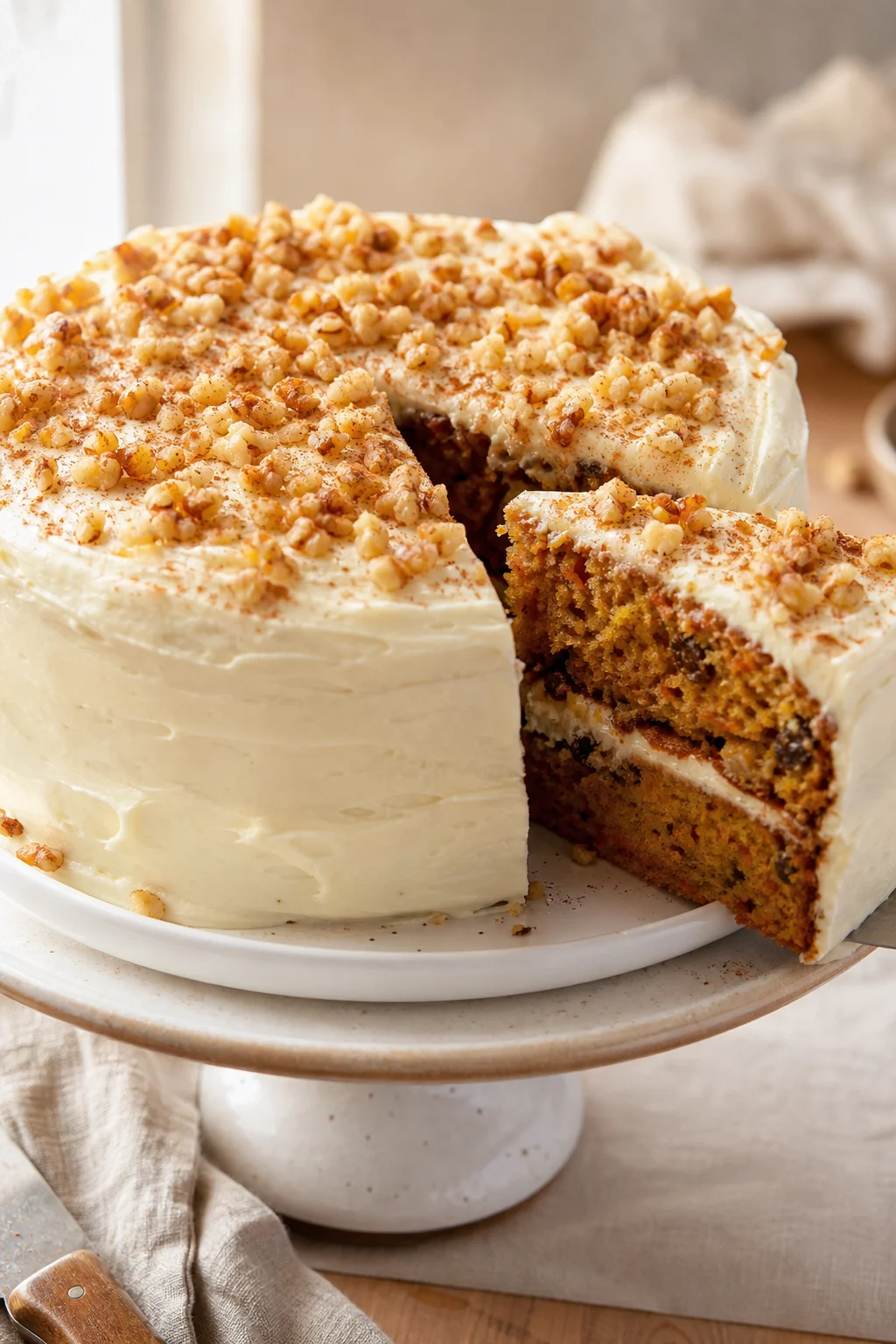
This is not a dry, flat, forgettable version. This cake bakes up moist, deeply spiced, and perfectly balanced — sweet without being cloying, tender without falling apart. The cream cheese frosting is silky and just tangy enough to cut through the richness of the cake layers.
The first time I made this recipe, I pulled the cakes from the oven too early because I was impatient. The centers were still soft and collapsed slightly when I turned them out. You will learn from my mistake — always do the toothpick test before pulling your pans. More on that below.
Recipe Details
| Serves | 12 |
| Prep Time | 20 minutes |
| Cook Time | 35–45 minutes |
Ingredients
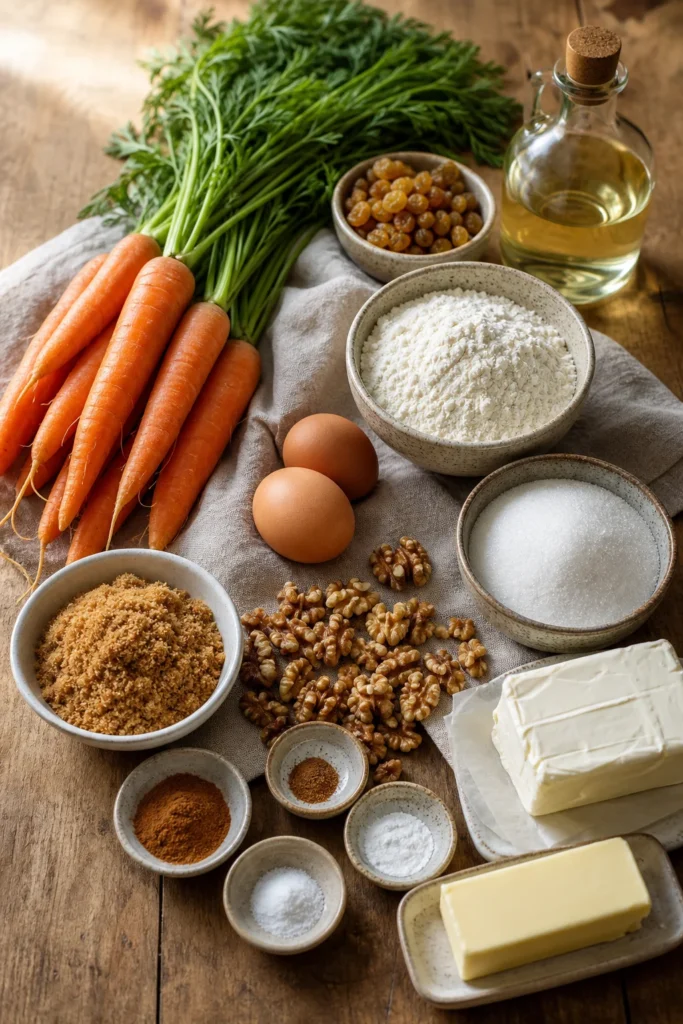
Before you start, here is a quick note: this ingredient list is simple, pantry-friendly, and deeply reliable. The combination of granulated and brown sugar gives you both sweetness and a subtle caramel depth. The vegetable oil keeps every bite moist — even on day two. The optional walnuts or raisins are entirely your call, but they add beautiful texture and little bursts of flavor throughout.
For the Cake:
- 2 cups all-purpose flour
- 2 teaspoons baking soda
- 1/2 teaspoon fine salt
- 2 teaspoons ground cinnamon
- 1 1/2 cups vegetable oil
- 1 cup granulated sugar
- 1 cup packed light brown sugar
- 1 teaspoon vanilla extract
- 4 large eggs
- 3 cups grated peeled carrots
- 1 cup chopped walnuts or pecans (optional)
- 1/2 cup raisins (optional)
For the Cream Cheese Frosting:
The frosting is where this cake becomes unforgettable. Softened cream cheese and butter come together into something smooth and cloud-like, barely sweet, with just a pinch of salt that makes every other flavor snap into focus.
- 8 ounces cream cheese, softened
- 1/2 cup unsalted butter, softened
- 1 to 1 1/4 cups powdered sugar
- 1 teaspoon vanilla extract
- Pinch of salt
Instructions
Read through all the steps once before you begin. This is a straightforward recipe, but knowing where you are headed helps you stay calm and confident in the kitchen.
1. Prepare your pans and oven. Preheat your oven to 350°F (175°C). Grease two 9-inch round cake pans, then line the bottoms with parchment paper for easy release. Lightly grease the parchment as well. This two-step prep means your cakes will slide out cleanly every time.
2. Whisk the dry ingredients. In a medium bowl, whisk together the flour, baking soda, salt, and cinnamon. Mix well so the leavening and spices are evenly distributed throughout. Set this dry mixture aside.
3. Combine the wet ingredients. In a large mixing bowl, combine the vegetable oil, granulated sugar, brown sugar, and vanilla extract. Whisk until the mixture looks smooth and well blended. You will notice it turns slightly glossy and comes together beautifully.
4. Add the eggs. Add the eggs one at a time, whisking well after each addition. This step is important — it creates a smooth, cohesive batter and ensures every egg is fully incorporated before the next one goes in.
5. Add the dry ingredients. Gradually add the dry ingredients to the wet ingredients. Stir gently with a spatula or wooden spoon just until no dry streaks remain. Do not overmix here. Overmixing develops the gluten in the flour and can make your cake dense instead of tender.
6. Fold in the carrots and mix-ins. Fold in the freshly grated carrots. If you are using walnuts, pecans, or raisins, fold them in at this stage as well. Stir only until everything is evenly combined.
7. Fill the pans. Divide the batter evenly between the prepared cake pans. Smooth the tops with a spatula so they bake level and evenly.
8. Bake. Place the pans in the oven and bake for 35 to 45 minutes, or until the tops spring back lightly when touched and a toothpick inserted into the center comes out clean. Ovens vary — start checking at the 35-minute mark.
9. Cool the cakes. Remove the cakes from the oven and let them cool in the pans for about 15 minutes. Then turn them out onto a wire rack, peel off the parchment, and let them cool completely before frosting. This step is non-negotiable — frosting a warm cake will cause everything to slide and melt.
10. Make the frosting. Beat the softened cream cheese and butter together in a bowl until smooth and creamy. Add the powdered sugar, vanilla extract, and a pinch of salt. Beat until the frosting is light, smooth, and spreadable. Taste as you go — you can adjust the sweetness by adding a bit more powdered sugar.
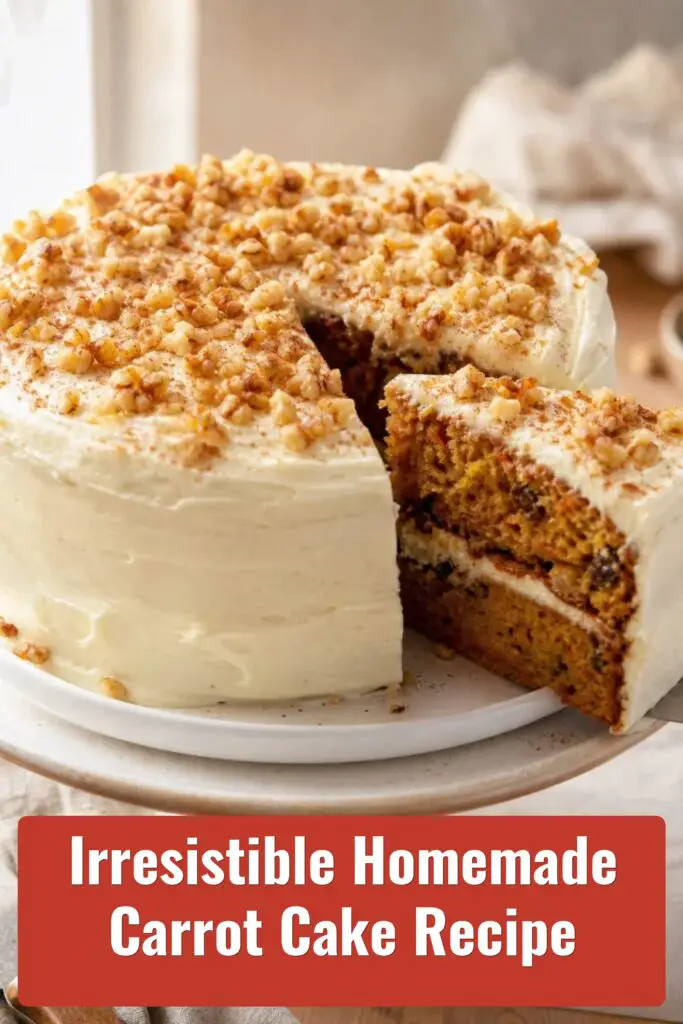
11. Frost the cake. Once the cakes are completely cool, place one cake layer on a serving plate. Spread a generous layer of frosting over the top. Place the second cake layer on top and frost the top and sides of the cake evenly.
12. Decorate and chill. Decorate with extra chopped nuts, a sprinkle of cinnamon, or simple carrot shapes made from frosting if you like. Chill the cake slightly before slicing — about 20 minutes in the refrigerator gives you cleaner, more beautiful pieces.
Chef Tips You Will Actually Use
Use freshly grated carrots rather than pre-shredded ones from a bag. Fresh carrots are moister, softer, and they melt right into the batter. Pre-shredded ones can be dry and coarse.
Do not overmix the batter after adding the flour. Stir just until the dry streaks disappear, then stop.
Make sure both cake layers are fully cooled before you touch them with frosting — even a slightly warm cake will cause the cream cheese to slide right off.
Lightly toast your nuts before folding them in or using them as decoration. Two to three minutes in a dry pan over medium heat and they turn golden, nutty, and fragrant in a way that raw nuts simply cannot match.
Want a richer spice profile? Add a pinch of nutmeg or ground ginger alongside the cinnamon. It adds a gentle warmth that makes the whole cake feel more complex.
Nutrition Information
Per serving, based on 12 servings. Values are approximate.
| Nutrient | Amount Per Serving |
|---|---|
| Calories | ~620 kcal |
| Total Fat | 38g |
| Saturated Fat | 10g |
| Cholesterol | 85mg |
| Sodium | 320mg |
| Total Carbohydrates | 67g |
| Dietary Fiber | 2g |
| Total Sugars | 49g |
| Protein | 6g |
| Vitamin A | 80% DV |
| Calcium | 6% DV |
| Iron | 8% DV |
Note: Nutritional values will vary depending on whether you include the optional walnuts, pecans, or raisins.
Frequently Asked Questions
Can I make this carrot cake ahead of time? Yes, and it actually gets better. Bake the cake layers a day ahead, wrap them tightly in plastic wrap, and store them at room temperature. Frost on the day you plan to serve. The flavors deepen overnight and the texture becomes even more tender.
Can I use a different oil instead of vegetable oil? Absolutely. Melted coconut oil works beautifully here and adds a very subtle warmth. Light olive oil also works well. Avoid strong-flavored oils that might compete with the cinnamon and vanilla.
Why is my carrot cake dense instead of fluffy? The most common reason is overmixing the batter after the flour is added. Another culprit is old baking soda — if yours has been open for more than six months, it may have lost its strength. Always test baking soda by dropping a small amount into hot water. If it bubbles vigorously, it is still active.
Can I make this as a sheet cake instead of a layer cake? Yes. Pour all the batter into a greased 9×13 inch baking pan and bake at 350°F for approximately 40 to 50 minutes. Check with a toothpick starting at the 40-minute mark.
How should I store leftover carrot cake? Because of the cream cheese frosting, this cake needs to be refrigerated. Store it covered in the refrigerator for up to five days. Let individual slices sit at room temperature for about 15 minutes before eating — the crumb relaxes and the frosting softens back to that silky texture.
Can I freeze carrot cake? Yes. Freeze the unfrosted cake layers wrapped tightly in plastic wrap and then foil for up to three months. Thaw overnight in the refrigerator, then frost fresh. You can also freeze frosted slices individually, though the texture of the frosting may change slightly upon thawing.
Do I have to use both walnuts and raisins? Not at all. These are completely optional. Some people love the chewy sweetness that raisins bring. Others prefer the crunch of toasted pecans. And plenty of people skip both entirely for a cleaner, smoother crumb. Make it the way your family loves it.
Can I reduce the sugar in this recipe? You can reduce each sugar by about two tablespoons without significantly affecting the texture. Going much lower may impact how the cake browns and holds moisture. If you are looking for a lower-sugar version, consider using a lightly sweetened Greek yogurt frosting instead of the classic cream cheese version.
Have you made this cake for a birthday, a holiday, or just a Tuesday afternoon when you needed something warm and good? What did you add — nuts, raisins, a little extra cinnamon? Tell me in the comments — I would love to know how your version turned out.