The Best Homemade Pie Crust Recipe
Recipe
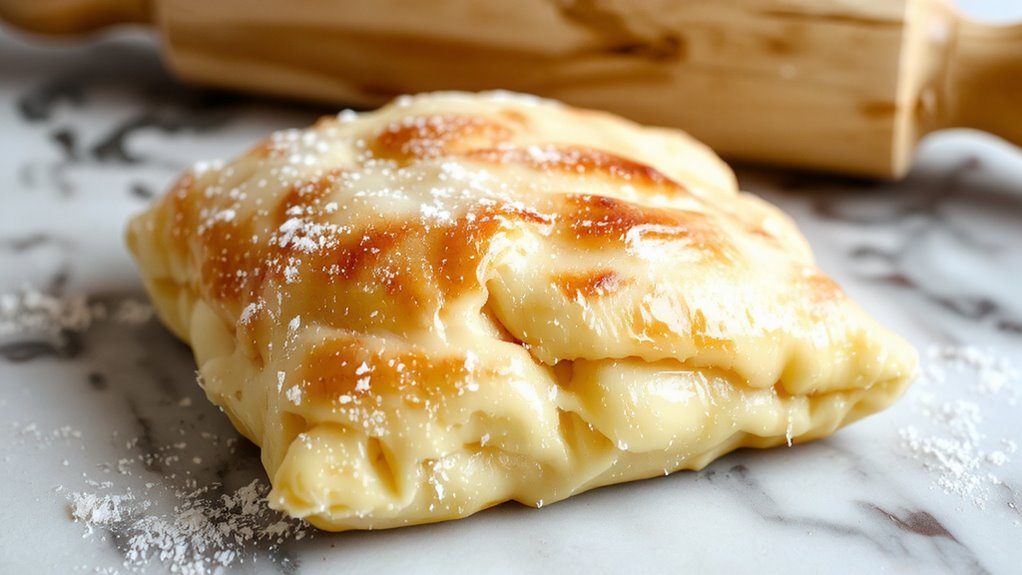
I can confidently say this homemade pie crust recipe is a game-changer—flaky, buttery, and so much better than anything store-bought. What makes it special? Simple ingredients like cold butter and a touch of vinegar come together with a hands-on technique that guarantees the perfect texture every time.
I’ve spent years perfecting this method, and it’s become my go-to for everything from apple pie to quiches. Imagine this: a crust that’s golden and crisp, with layers that practically shatter as you slice into it, yet tender enough to melt in your mouth.
Trust me, once you try this, you’ll never look back. It’s easier than you think—let’s get baking!
Ingredients
The secret to a flaky, buttery pie crust lies in the quality of ingredients and how they interact. Cold is key—keep everything chilled to prevent the fat from melting too soon, which guarantees those coveted layers.
Here’s what you’ll need, with insider tricks to make it foolproof:
- All-purpose flour – The backbone of your crust. For extra tenderness, swap ¼ cup with cake flour, but don’t overmix—gluten is the enemy of flakiness.
- Unsalted butter (very cold) – *Non-negotiable.* Freeze it for 15 minutes before using. Butter’s water content creates steam pockets = flaky layers. Vegan? High-fat margarine works, but flavor suffers.
- Vegetable shortening (optional) – Adds tenderness. Use half butter, half shortening for balance. Lard is a stellar old-school sub for shortening.
- Ice water – *Must be ice-cold.* Add 1 tsp vinegar or vodka to inhibit gluten and boost tenderness.
- Salt – Enhances flavor. Diamond Crystal kosher salt is ideal; if using table salt, halve the amount.
- Sugar (optional) – Just 1 tsp sweetens subtly without compromising texture. Skip for savory pies.
*Pro tip:* Grate frozen butter into the flour for effortless blending—no pastry cutter needed.
And always weigh your flour (1 cup ≈ 120g) for consistency.
How to Make the Best Flaky Butter-Based Pie Crust
- Prep your ingredients: Chill your butter and water beforehand. Cold butter guarantees flaky layers, while cold water helps maintain the dough’s texture during mixing. Cut the butter into small cubes for easier incorporation.
- Combine dry ingredients: In a large bowl, whisk together the flour and salt. This evenly distributes the salt, which enhances flavor and strengthens the dough’s structure.
- Cut in the butter: Add the cold butter cubes to the flour mixture. Use a pastry cutter or your fingertips to work the butter into the flour until the mixture resembles coarse crumbs with pea-sized butter pieces. These small butter pockets create the flaky layers when baked.
- Add cold water: Sprinkle ice water (1 tablespoon at a time) over the flour-butter mixture. Gently mix with a fork or your hands until the dough just comes together. Avoid overmixing to prevent a tough crust.
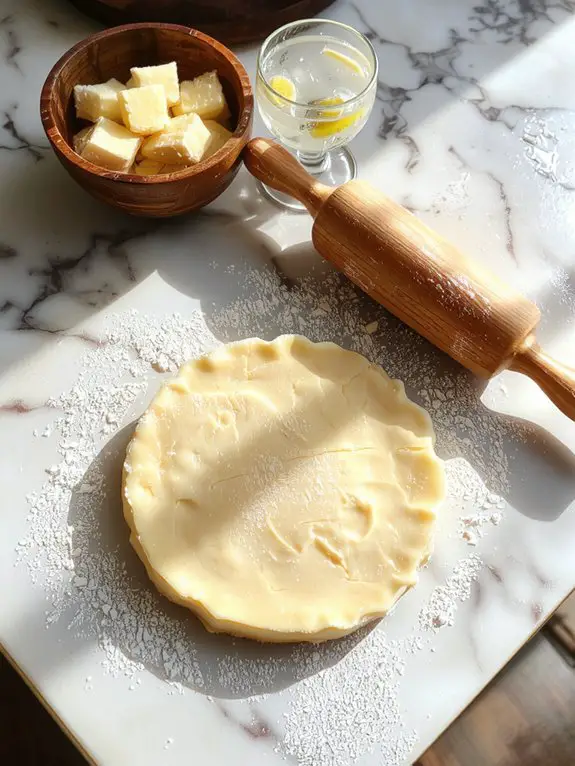
- Form the dough: Gather the dough into a ball, then divide it in half. Shape each half into a disc, wrap in plastic wrap, and refrigerate for at least 1 hour. Chilling the dough relaxes the gluten and firms up the butter, making it easier to roll out.
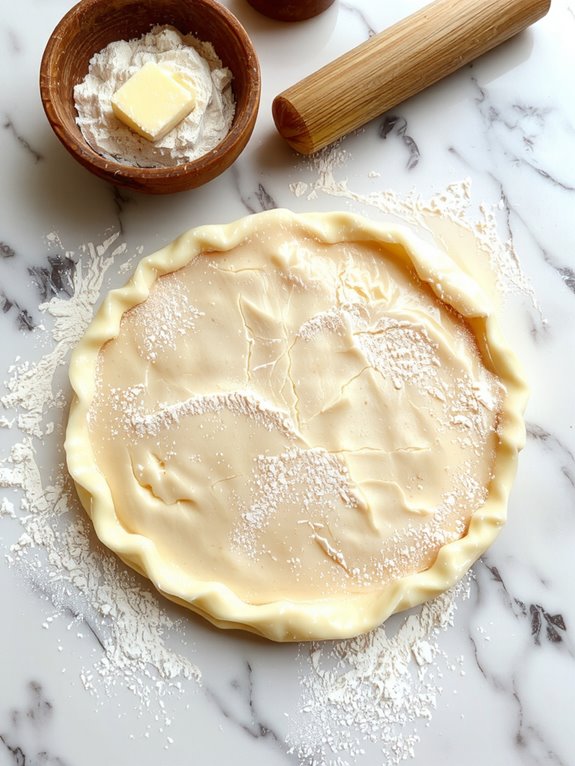
- Roll out the dough: Lightly flour your work surface and rolling pin. Roll one disc of dough from the center outward, rotating it occasionally to maintain an even circle. Aim for a thickness of about 1/8 inch. Use gentle pressure to avoid tearing.
- Transfer to pie dish: Carefully fold the rolled dough in half or drape it over the rolling pin, then place it into your pie dish. Press it gently into the corners without stretching, as stretched dough can shrink during baking.
- Trim and crimp: Trim the excess dough, leaving a 1-inch overhang. Fold the overhang under itself to create a thick edge, then crimp it decoratively with your fingers or a fork. This seals the crust and adds a finishing touch.
- Chill again: Place the prepared crust in the refrigerator for 15-30 minutes before baking. This prevents the butter from melting too quickly and secures a flaky texture.
- Bake as directed: Follow your pie recipe’s baking instructions. For blind baking (pre-baking the crust), prick the bottom with a fork, line with parchment paper, fill with pie weights or dried beans, and bake until lightly golden. Remove the weights and finish baking as needed.
Nutrition
This homemade pie crust recipe provides a delicious base for your favorite pies. Here’s the nutritional information per serving.
| Calories | Fat | Carbs | Protein | Cholesterol | Sodium |
|---|---|---|---|---|---|
| 120 | 8g | 10g | 2g | 20mg | 75mg |
Chef Tips
A perfectly flaky pie crust starts with chilled ingredients straight from the fridge. I’ll use my knife skills to cut cold butter into small cubes before blending it into the flour.
Don’t overwork the dough—it’ll toughen up. After rolling it out, I focus on plating techniques, crimping the edges neatly for a polished look.
A golden bake finishes it perfectly.
Frequently Asked Questions
Can I Use a Food Processor for Mixing?
Yes, I use a food processor, but I keep the processor speed low and watch the mixing time—just pulse until the dough comes together. Overmixing makes it tough, so I stop as soon as it looks right.
How Long Can I Store the Dough in the Fridge?
I’d store the pie dough in the fridge for up to 3 days—that’s its best shelf life. Wrap it tightly in plastic to keep it fresh. If you need longer, freeze it—refrigerated dough storage won’t last forever.
Can I Freeze the Pie Crust?
I can freeze the pie crust for up to 3 months. For freezing tips, wrap it tightly in plastic and foil. When needed, use thawing methods like letting it sit in the fridge overnight before rolling.
What’s the Best Way to Roll Out the Dough?
I chill the dough first, then roll it out on a lightly floured surface. I aim for an even dough thickness, about 1/8-inch, using a gentle rolling technique—pressing outward from the center without overworking it.
Can I Substitute Butter With Shortening?
I can substitute butter with shortening, but it’ll change the butter flavor and pastry texture. Shortening makes the crust flakier and more tender, but it lacks butter’s rich taste, so I’d adjust based on my preference.