The Best Homemade Cacio E Pepe Recipe
Recipe
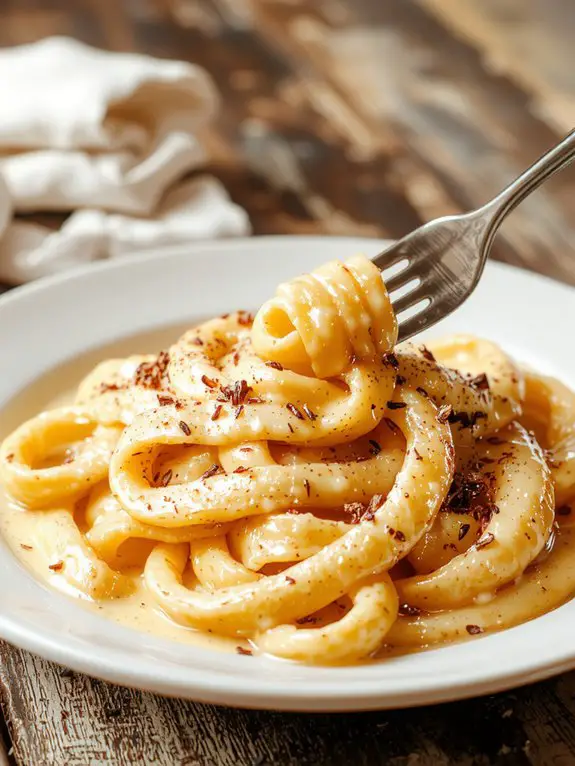
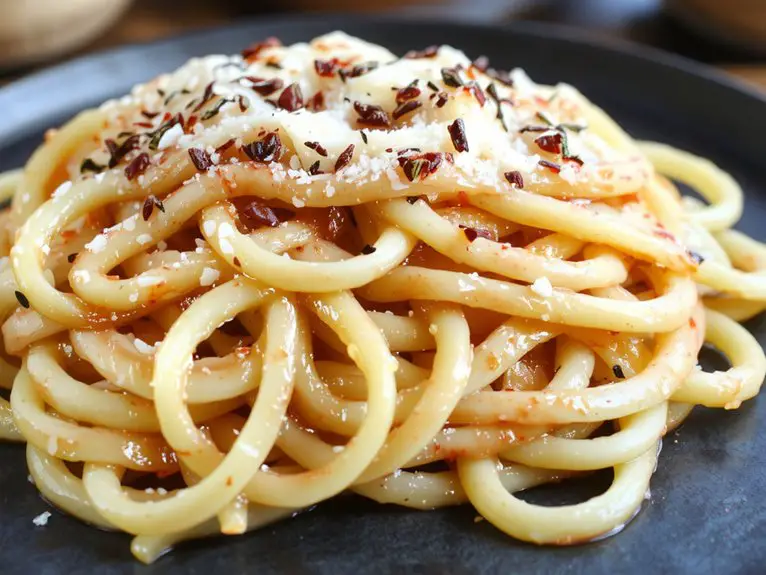
This cacio e pepe recipe will ruin every other pasta dish for you—it’s *that* good. With just three simple ingredients—pecorino romano, black pepper, and pasta—this Roman classic proves that less is truly more.
The magic lies in the technique: perfectly toasted pepper releases its earthy warmth, while the salty, creamy pecorino sauce coats every strand of pasta like a silky hug. It’s rich yet light, bold yet balanced, and so ridiculously satisfying that you’ll swear it belongs on a menu at a trattoria in Rome.
Trust me, once you master this dish, it’ll become your go-to for impressing guests or treating yourself on a lazy night. Let’s get that pasta water boiling—you’re about to fall in love.
Ingredients
The magic of cacio e pepe lies in its simplicity—just a handful of ingredients, but each one plays a starring role. Quality matters here, so don’t skimp. Here’s what you’ll need to nail this Roman classic:
- Pecorino Romano – The non-negotiable star. Its sharp, salty punch is irreplaceable. Skip the pre-grated stuff—freshly grated melts smoother.
- Black pepper – Freshly cracked is a must. Toast it lightly in the pan to unleash its aromatic depth.
- Pasta – Traditionalists swear by tonnarelli or spaghetti. The ridges help the sauce cling.
- Pasta water – Reserved and starchy, it’s the glue that binds everything. Don’t drain it all!
- Butter or olive oil – A tiny knob of butter (or a drizzle of oil) adds silkiness. Purists debate this, but it’s a cheat for creaminess.
Pro tip: If Pecorino’s too sharp for you, blend it 50/50 with Parmigiano-Reggiano.
And if your sauce breaks? A splash of hot pasta water and a vigorous stir will save it.
How to Make the Best Authentic Cacio E Pepe
- Cook the pasta: Use a large pot of salted boiling water to cook spaghetti just until al dente. Reserve about 1 cup of pasta water before draining—this starchy liquid is essential for creating the sauce’s silky texture.
- Toast the pepper: While the pasta cooks, toast freshly cracked black pepper in a skillet over medium heat for about 1 minute. This step enhances the pepper’s flavor and aroma, adding depth to the dish.
- Combine pasta and pepper: Transfer the drained pasta to the skillet with the toasted pepper. Toss to coat the spaghetti evenly, guaranteeing each strand gets a hint of that warm, peppery flavor.
- Add cheese gradually: Remove the skillet from heat and sprinkle finely grated Pecorino Romano cheese over the pasta. Adding it off the heat prevents the cheese from clumping and ensures a smooth, creamy sauce.
- Incorporate pasta water: Slowly pour in the reserved pasta water, a splash at a time, while tossing the pasta vigorously. The starch in the water helps the cheese melt into a glossy, cohesive sauce.
- Adjust consistency: Continue adding pasta water until the sauce coats the pasta evenly but isn’t runny. The goal is a velvety texture that clings to the strands without pooling at the bottom of the skillet.
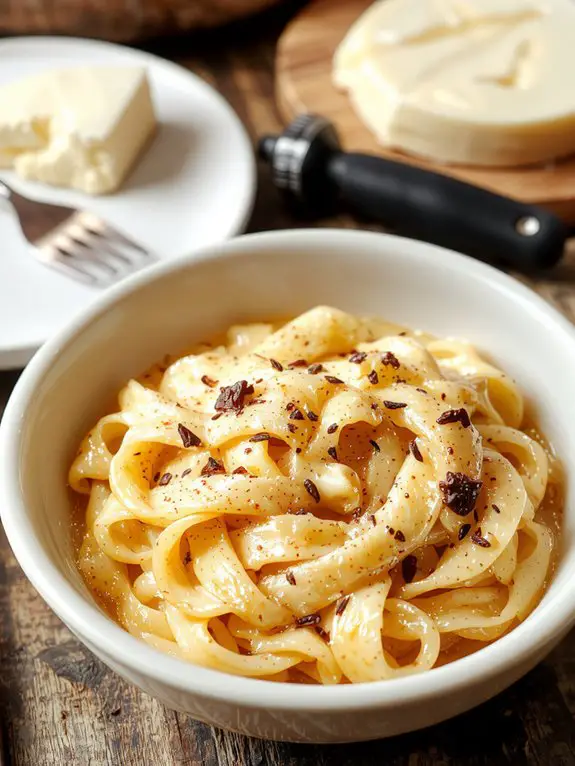
- Serve immediately: Plate the Cacio e Pepe right away, finishing with an extra sprinkle of Pecorino and a dash of cracked pepper. This dish is best enjoyed fresh and hot.
Pro Tip: Freshly grated cheese is non-negotiable—pre-grated cheese often contains anti-caking agents that can ruin the sauce’s texture.
Watch-Out Warning: Avoid overheating the cheese or adding too much pasta water at once, as these can lead to a grainy or watery sauce.
Nutrition
This simple Cacio E Pepe recipe provides a flavorful dish with a straightforward nutritional profile. Below are the key nutritional details per serving.
| Nutrient | Amount per Serving |
|---|---|
| Calories | 350 kcal |
| Protein | 12 g |
| Fat | 18 g |
| Carbohydrates | 35 g |
| Fiber | 2 g |
| Sugars | 1 g |
| Sodium | 450 mg |
Chef Tips
Mastering Cacio E Pepe isn’t just about following a recipe; it’s about understanding the technique.
Use freshly grated Pecorino Romano—pre-grated cheese won’t melt smoothly.
Reserve pasta water; its starch binds the sauce.
Toss pasta off heat to avoid clumping.
Add cheese gradually, stirring vigorously.
Pepper should be freshly cracked for bold flavor.
Serve immediately—it thickens fast.
Practice makes perfect, so don’t rush.
Now, go make magic.
Frequently Asked Questions
Can I Use Pre-Grated Cheese Instead of Freshly Grated?
I wouldn’t recommend pre-grated cheese ’cause it’s often coated to prevent clumping, which makes it harder to melt smoothly. Freshly grated cheese blends better, giving you that creamy, authentic texture you’re aiming for.
Is It Possible to Make This Recipe Gluten-Free?
Yes, I can make this recipe gluten-free by using gluten-free pasta. I just need to verify it’s a high-quality brand that holds up well when cooked. Everything else, like the cheese and pepper, stays the same.
Can I Substitute Black Pepper With White Pepper?
Yes, I can substitute black pepper with white pepper, but it’ll change the flavor slightly. White pepper’s milder and less complex, so I’d use a bit more to match the intensity while keeping the dish’s peppery essence intact.
How Do I Store Leftover Cacio E Pepe?
I store leftover cacio e pepe in an airtight container in the fridge for up to two days. When reheating, I add a splash of water or pasta water to restore its creaminess before gently warming it.
Can I Add Cream to Make It Creamier?
I’d skip the cream; it’s not traditional for cacio e pepe. The cheese and starchy pasta water create the creaminess naturally. Adding cream can overwhelm the dish’s simplicity and alter its authentic flavor and texture.


