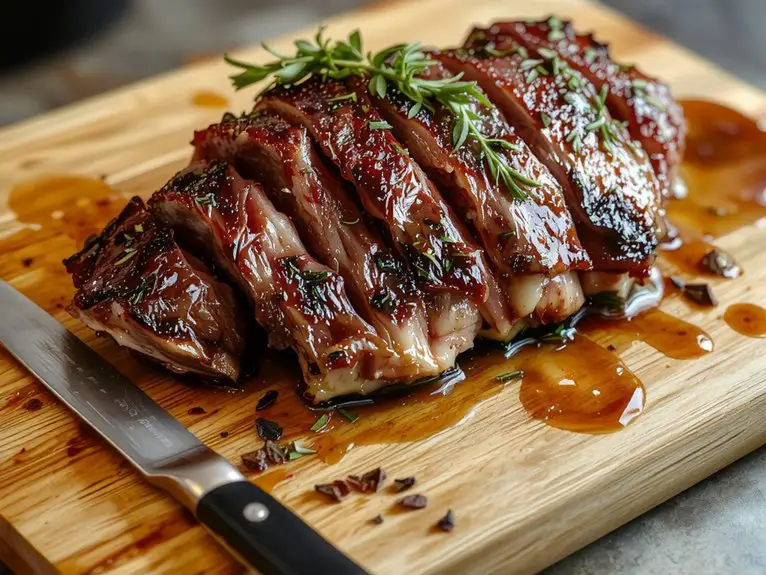
The Best Homemade Smoked Brisket Recipe
Recipe
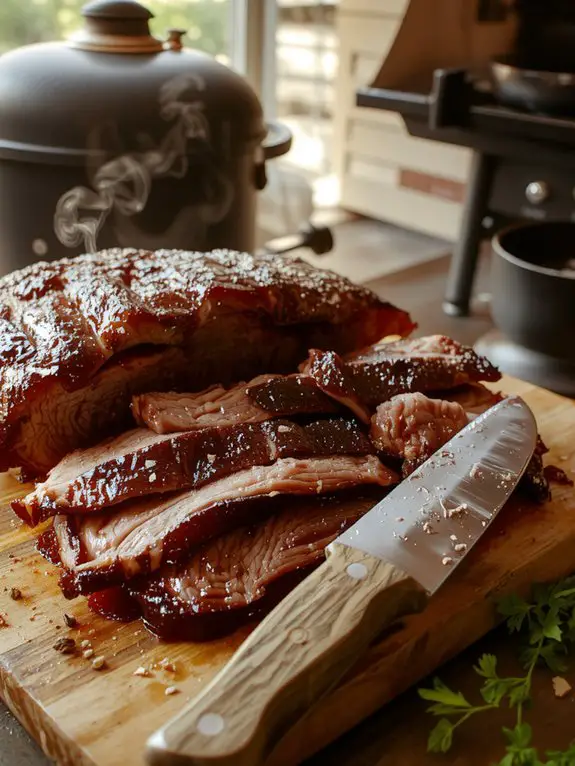
There’s nothing quite like the rich, smoky aroma of a perfectly cooked brisket—tender, juicy, and packed with flavor that makes every bite unforgettable. This homemade smoked brisket recipe is a game-changer, whether you’re a seasoned pitmaster or a backyard BBQ newbie.
The secret? Low-and-slow smoking with a simple yet powerful rub that lets the meat shine, plus a foolproof method to lock in those mouthwatering juices. Visualize this: a deep mahogany bark giving way to melt-in-your-mouth slices, with just the right balance of smoky, savory, and slightly sweet notes.
Trust me, once you try this, you’ll never go back to store-bought. Let’s fire up the smoker and make some magic.
Ingredients
To make the best-smoked brisket, the quality of your ingredients matters just as much as your technique. A well-marbled brisket and the right blend of seasonings are the backbone of this dish. Here’s what you’ll need, along with some insider tips to elevate your flavor game:
- Brisket (10–12 lbs): Look for a whole packer brisket with a thick fat cap and good marbling. This guarantees tenderness and flavor. If you can’t find a whole packer, a flat cut works, but be extra vigilant about monitoring moisture.
- Coarse kosher salt: Coarse salt adheres better and seasons evenly. Avoid table salt—it’s too fine and can over-season.
- Coarse black pepper: Freshly ground pepper adds a robust, spicy crust. Use a medium grind for the best texture.
- Garlic powder: Adds depth and umami. Opt for pure garlic powder, not garlic salt.
- Onion powder: Complements the garlic and adds a touch of sweetness.
- Paprika (optional): For a smoky, slightly sweet undertone. Use smoked paprika for extra depth.
- Worcestershire sauce (optional): A light brush on the brisket before seasoning helps the rub stick and adds savory complexity.
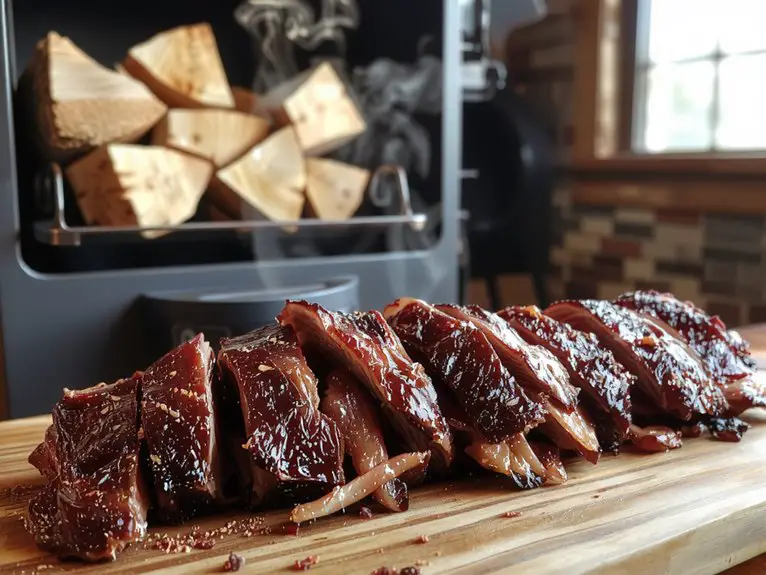
- Wood chunks or chips (hickory, oak, or pecan): These are essential for that authentic smoke flavor. Avoid mesquite—it’s too intense for brisket.
- Butcher paper or aluminum foil (optional): Butcher paper is preferred for the “Texas crutch” method, as it allows the brisket to breathe while retaining moisture.
Pro Tips:
- Let the brisket sit at room temperature for about an hour before smoking to guarantee even cooking.
- If you’re short on time, a pre-mixed brisket rub can work, but homemade is always worth the effort.
- Skip lean cuts—fat is your friend here. It renders down during cooking, keeping the brisket juicy.
Substitutions:
- No Worcestershire sauce? Soy sauce or a splash of apple cider vinegar can work in a pinch.
- Out of wood chunks? Pellets designed for smokers are a fine alternative.
Non-Negotiables:
– A well-marbled brisket and fresh spices are essential. Pre-ground spices tend to lose potency, so opt for freshly ground when possible.
Little Wins:
– Keep a spray bottle of apple juice or beef broth on hand to spritz the brisket during smoking. It keeps the surface moist and enhances the bark.
How to Make the Best Smoked Brisket Recipe Name
Trim the brisket: Remove excess fat, leaving about 1/4 inch to keep the meat moist during smoking. Trimming helps the smoke penetrate evenly and prevents flare-ups.
Season generously: Coat the brisket liberally with your dry rub, covering all sides. Let it sit at room temperature for 30 minutes—this helps the seasoning adhere and enhances flavor penetration.
Preheat the smoker: Set your smoker to 225°F and add your choice of wood chunks (like hickory or oak) for smoke flavor. Consistent low heat is key for tender brisket.
Place the brisket in the smoker: Position it fat-side up on the grate to allow the fat to render down through the meat, keeping it juicy. Insert a meat thermometer into the thickest part.
Maintain steady smoke and temperature: Monitor the smoker to guarantee it stays at 225°F. Resist opening the lid too often—this lets heat escape and disrupts the cooking process.
Spritz occasionally: After 3-4 hours, spritz the brisket every hour with a mix of apple cider vinegar and water to keep the surface moist and enhance the bark formation.
Wrap when it stalls: When the internal temperature reaches around 160°F and the meat stalls, wrap it tightly in butcher paper or foil. This speeds up cooking and locks in moisture.
Continue smoking until tender: Cook until the internal temperature hits 200-205°F and the probe slides in easily like butter. This confirms the connective tissues have fully broken down.
Rest the brisket: Remove it from the smoker and let it rest, still wrapped, for at least 1 hour. Resting allows the juices to redistribute, resulting in a more flavorful and tender brisket.
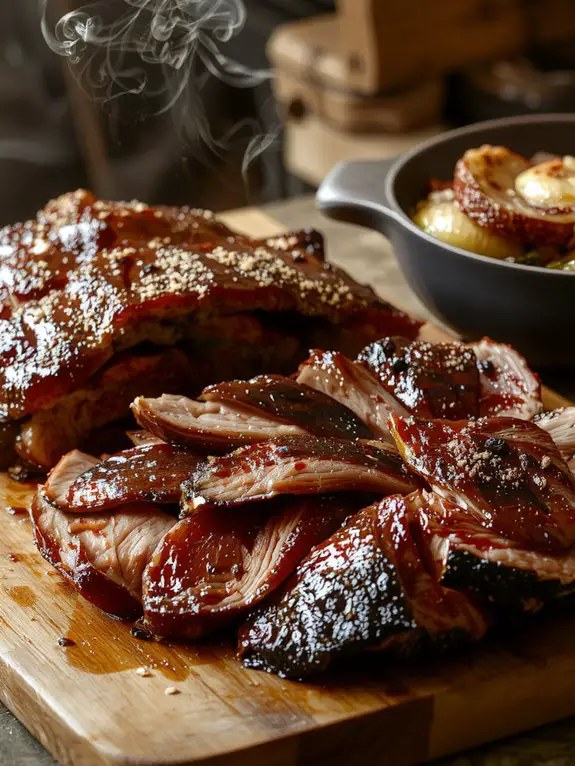
Slice against the grain: Cut the brisket into thin slices, making sure to go against the grain for maximum tenderness. Serve immediately and enjoy!
Nutrition
This smoked brisket is packed with protein and rich flavors, but it’s also high in calories and fat. Below is the nutritional breakdown per serving.
| Nutrient | Amount per Serving |
|---|---|
| Calories | 550 kcal |
| Protein | 45 g |
| Fat | 40 g |
| Carbohydrates | 0 g |
| Sodium | 800 mg |
Chef Tips
When preparing a smoked brisket, I always recommend starting with a well-trimmed cut to guarantee even cooking and better smoke absorption.
I prefer using a mix of salt, pepper, and garlic for the rub—it enhances the meat’s natural flavor.
Low and slow is key; I aim for 225°F and cook until it reaches an internal temperature of 195-203°F.
Rest it for at least an hour before slicing.
Frequently Asked Questions
Can I Use a Gas Grill Instead of a Smoker?
Yes, I can use a gas grill instead of a smoker. I’ll need to create indirect heat, use a smoker box or foil pouch with wood chips, and monitor the temperature carefully to achieve that smoky flavor.
What Wood Gives the Best Smoky Flavor?
I think hickory or oak gives the best smoky flavor for brisket—they’re strong but balanced. Mesquite’s too intense for long cooks, and fruitwoods like apple or cherry add sweetness. I’d stick with hickory if I were you.
How Long Does It Take to Smoke a Brisket?
I’d say it takes about 12-16 hours to smoke a brisket at 225°F, but it depends on the size. I always check for tenderness—when it probes like butter, it’s done, no matter the time.
Can I Freeze Leftover Smoked Brisket?
Yes, I can freeze leftover smoked brisket. I’d wrap it tightly in foil or plastic, then place it in an airtight container or freezer bag. It’ll keep for up to 3 months without losing much flavor.
What Internal Temperature Should the Brisket Reach?
Aim for 195-205°F internal temp—that’s when the collagen breaks down and your brisket gets tender. I always probe multiple spots to be sure. If it feels like butter, you’re golden. Don’t rush it!