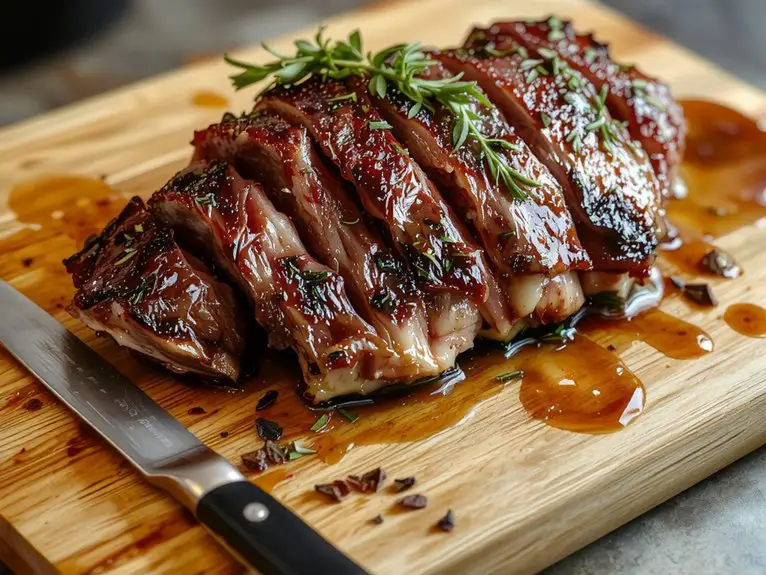
The Best Homemade Standing Rib Roast Recipe
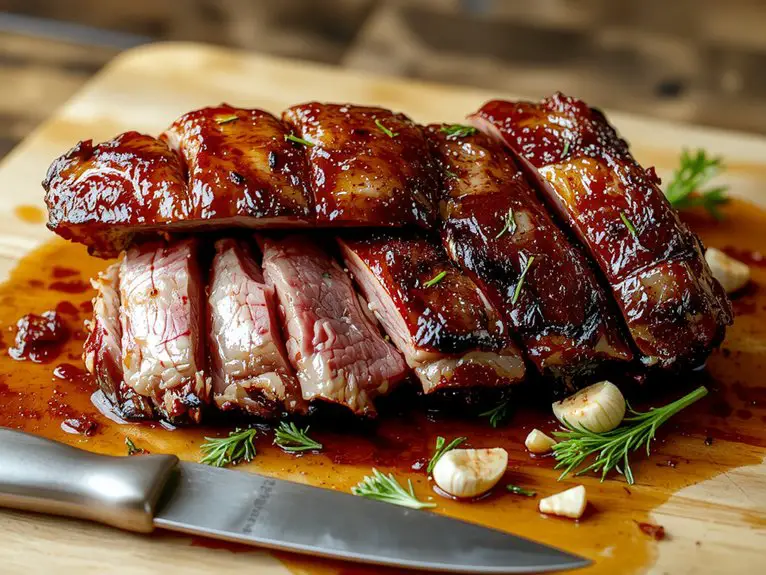
Recipe
I can promise you this standing rib roast recipe will make you the hero of any holiday dinner—it’s foolproof, luxurious, and downright unforgettable. What sets it apart? A simple yet genius blend of garlic, rosemary, and thyme rubbed into the meat, creating a crust that’s packed with flavor while keeping the inside juicy and tender.
I’ve perfected this method after years of tweaking, and trust me, it’s worth every minute of prep. Imagine this: a golden-brown exterior giving way to slices of melt-in-your-mouth beef, perfectly pink and bursting with deep, savory richness.
Whether it’s Christmas, a birthday, or just a Sunday feast, this dish transforms any meal into a celebration. And don’t worry—it’s easier than it looks, and I’ll walk you through every step. Get ready to impress your guests (and yourself!) with a roast they’ll be talking about for years.
Ingredients
For a standing rib roast that’s juicy, flavorful, and worthy of a special occasion, quality ingredients are non-negotiable. Here’s what you’ll need—plus insider tips to make every bite unforgettable.
– Standing rib roast (prime rib): Aim for a bone-in, well-marbled cut (3–5 ribs, about 5–7 lbs). The fat cap is your friend—it bastes the meat as it cooks.
*Pro tip:* Ask your butcher for the “first cut” (ribs 10–12) for even tenderness.
– Kosher salt: Coarse grains adhere better and draw out moisture for a deeper crust.
*Skip table salt—it’s too fine and can over-season.*
- Freshly ground black pepper: Pre-ground lacks punch. Grind it coarse for a bold, aromatic crust.
- Garlic: Fresh cloves (minced or pressed) are essential.
*Powder won’t cut it here—the sharp, raw bite mellows into sweetness while roasting.*
– Fresh rosemary & thyme: Woody herbs hold up to long cooking.
*Dried herbs can burn; if you must use them, halve the amount.*
– Olive oil or melted butter: Helps the seasoning cling and promotes browning.
*Butter adds richness; oil has a higher smoke point.*
- Optional upgrades:
- *Red wine or beef stock* for deglazing the pan (makes an effortless jus).
- *Dijon mustard* brushed on before roasting for a tangy, caramelized crust.
- *Shallots* tucked around the roast—they caramelize into silky sweetness.
*Flexible swaps:* No fresh herbs? Use 1 tsp dried rosemary + 1 tsp dried thyme (add with the salt). For a richer flavor, rub the roast with softened butter instead of oil.
How to Make the Best Perfect Rib Roast Steps
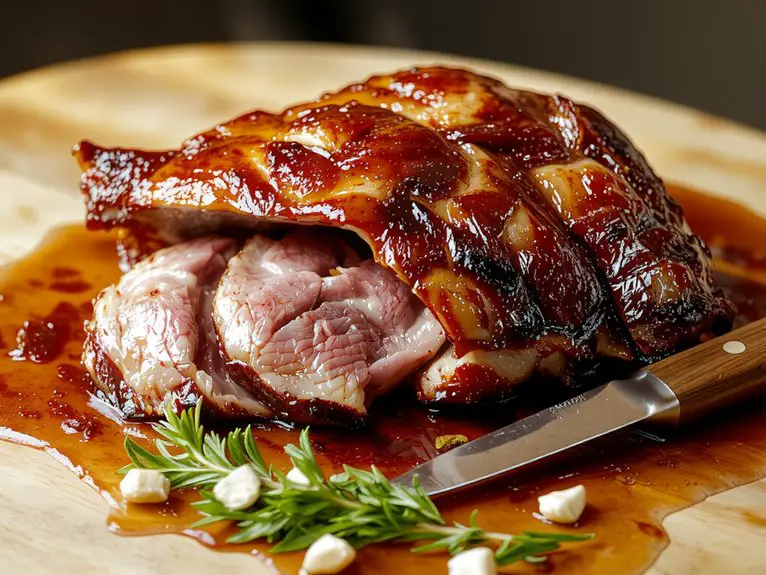
- Preheat oven to 450°F (232°C) – A high initial temperature guarantees a flavorful crust.
- Pat the rib roast dry with paper towels – Removing moisture helps achieve a better sear.
- Season generously with salt, pepper, and herbs – Coat all sides for even flavor.
- Place roast fat-side up on a rack in a roasting pan – Elevating it allows heat to circulate.
- Roast for 15 minutes at high heat – This creates a crispy exterior.
- Reduce heat to 325°F (163°C) and continue roasting – Slow cooking secures tender meat.
- Use a meat thermometer to check doneness – Aim for 120°F (49°C) for rare, 130°F (54°C) for medium-rare.
- Let rest for 20 minutes before carving – Resting retains juices for a moist roast.
Pro Tips
- Bring roast to room temperature before cooking – Guarantees even cooking.
- Tent loosely with foil while resting – Keeps it warm without trapping steam.
- Save pan drippings for gravy – Adds rich flavor to sauces.
Watch-Out Warnings
- Avoid opening the oven frequently – Temperature fluctuations dry out the meat.
- Don’t skip resting time – Cutting too soon releases juices, making the roast dry.
- Check thermometer placement – Insert into the thickest part, avoiding bone.
Nutrition
Standing rib roast is a flavorful cut of beef that provides a rich source of nutrients. Here’s the nutritional breakdown per serving:
| Nutrient | Amount |
|---|---|
| Calories | 320 kcal |
| Protein | 28 g |
| Fat | 22 g |
| Saturated Fat | 9 g |
| Cholesterol | 85 mg |
| Sodium | 75 mg |
| Iron | 2.5 mg |
Chef Tips
It’s important to treat a standing rib roast with care to bring out its best flavors. I always season generously and let it reach room temperature before cooking.
Preheat your oven and use a meat thermometer to avoid overcooking—medium-rare’s my go-to.
Rest the roast for at least 20 minutes; it locks in juices.
Save the drippings for gravy—it’s a game-changer. Trust me, these steps make all the difference.
Frequently Asked Questions
What Temperature Should the Rib Roast Be Initially?
I’d start my rib roast at 450°F to sear the outside. Then, I’d lower it to 325°F for even cooking. This method guarantees it’s crispy on the outside and tender inside without overcooking.
How Long Should the Roast Rest Before Carving?
I let my rib roast rest for 15-20 minutes before carving—it’s vital for juicy, tender meat. If it’s a larger roast, I’ll give it up to 30 minutes. Don’t skip this step!
Can I Prepare the Roast a Day in Advance?
Yes, I can prepare the roast a day in advance. I’ll season it, cover it tightly, and refrigerate it overnight. Before cooking, I’ll let it sit at room temperature for about an hour to guarantee even roasting.
What’s the Best Way to Store Leftovers?
I’ll store leftovers in an airtight container or wrap them tightly in foil, then refrigerate them within two hours. For longer storage, I’ll freeze them in portions, ensuring they’re well-sealed to maintain freshness and flavor.
Which Wine Pairs Best With Rib Roast?
I’d pair a robust red wine with rib roast, like Cabernet Sauvignon or Bordeaux—their tannins complement the rich meat. If I prefer something smoother, I’d choose a Pinot Noir or Merlot for balance.