The Best Homemade Bolognese Recipe
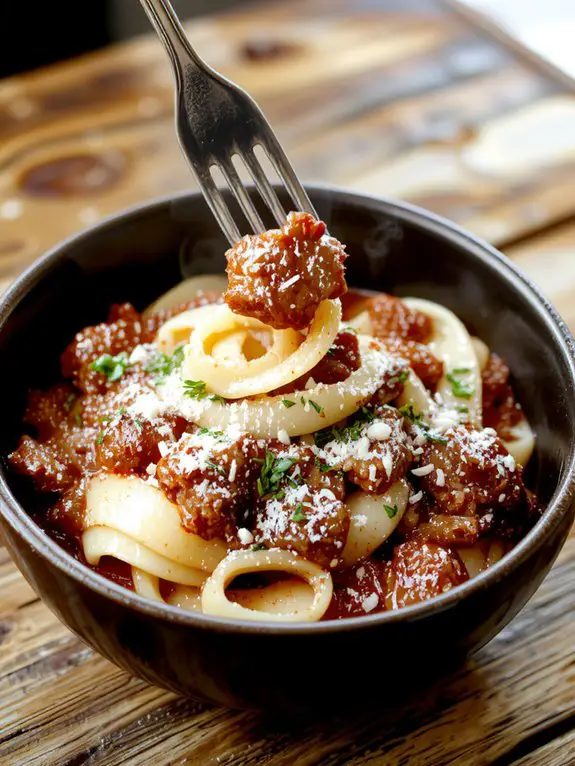
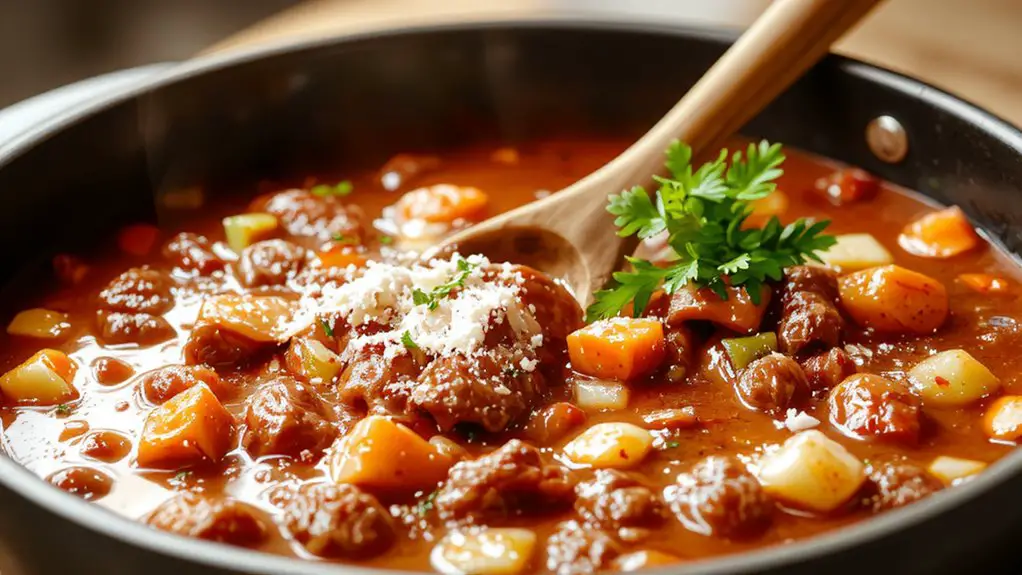
Recipe
There’s something magical about a rich, slow-simmered Bolognese—the kind that coats every strand of pasta in deep, meaty flavor and leaves you scraping the bowl for every last bite. This homemade version? It’s the real deal. Forget jarred sauces; this recipe leans on a few simple but game-changing tricks (hello, pancetta and a splash of milk) to build layers of savory-sweet goodness.
I’ve made this for everything from weeknight dinners to impressing in-laws, and it never fails. Imagine tender ground beef and pork melding with tomatoes, garlic, and herbs, simmered low and slow until it’s thick enough to cling to your fork. Trust me, once you taste this, there’s no going back. Let’s get cooking.
Ingredients
A truly authentic Bolognese starts with quality ingredients—this isn’t the place to cut corners. The magic lies in the layers of flavor built from the ground up, so choose wisely.
- Ground Meat: A mix of 50% beef (80/20 for richness) and 50% pork (for sweetness) is ideal. *Pro tip*: Hand-chopped pancetta (about 2 oz) blended into the meat adds depth. No pork? Use all beef, but bump up the fat content.
- Tomatoes: San Marzano crushed tomatoes (½ cup) for brightness, plus 1 tbsp tomato paste *toasted* in the pan first—this caramelization is non-negotiable.
- Aromatics: 1 finely diced carrot, celery stalk, and yellow onion (the “sofrito” base). *Skip the garlic*—traditional Bolognese avoids it to let the meat shine.
- Dairy: ½ cup whole milk (added early to tenderize the meat) and ¼ cup heavy cream (stirred in at the end). *Substitute*: Half-and-half works, but don’t omit entirely—it balances acidity.
- Wine: ½ cup dry white wine (Pinot Grigio) deglazes the pan. *Cheat*: Vermouth or chicken stock in a pinch, but wine adds irreplaceable complexity.
- Extras: A Parmesan rind simmered in the sauce (remove before serving) and 1 bay leaf. *Little win*: Freshly grated nutmeg (just a pinch) elevates the creaminess.
*Non-negotiable*: Simmer time—at least 3 hours on low heat. Bolognese is a labor of love, but every minute pays off.
How to Make the Best Authentic Bolognese Sauce
- Start by finely dicing your vegetables—carrots, celery, and onions. This soffritto base is essential for building flavor, and uniformity guarantees even cooking. Pro tip: Use a food processor to save time if you’re short on patience!
- Heat olive oil in a large, heavy-bottomed pot over medium heat. Add the diced vegetables and sauté until soft and translucent, about 8-10 minutes. This step is vital for developing a sweet, aromatic base. Watch out: Don’t let them brown—keep the heat moderate.
- Add ground meat (beef, pork, or a mix) to the pot, breaking it up with a wooden spoon. Cook until fully browned and no pink remains. Browning adds depth of flavor, so take your time here. Pro tip: Don’t overcrowd the pot—cook in batches if necessary to avoid steaming the meat.
- Stir in tomato paste and cook for 2-3 minutes, letting it caramelize slightly. This step intensifies the tomato flavor and gives the sauce richness. Visual cue: The paste should darken slightly and coat the meat and veggies evenly.
- Deglaze the pot with red wine, scraping up any browned bits from the bottom. This step adds complexity and prevents flavor loss. Pro tip: Use a dry wine you’d enjoy drinking—avoid cooking wine!
- Add canned tomatoes (crushed or puréed) and a splash of milk or cream. Milk tenderizes the meat and balances acidity, while tomatoes provide the base. Stir well to combine.
- Simmer the sauce gently for at least 2-3 hours, stirring occasionally. Slow cooking allows flavors to meld and the sauce to thicken naturally.
Pro tip: Keep the heat low to prevent scorching, and partially cover the pot to reduce splatter.
- Taste and season with salt, pepper, and a pinch of sugar if needed. Adjusting seasoning at the end guarantees balanced flavors. Watch out: Go easy on salt—tomatoes and broth can already be salty.
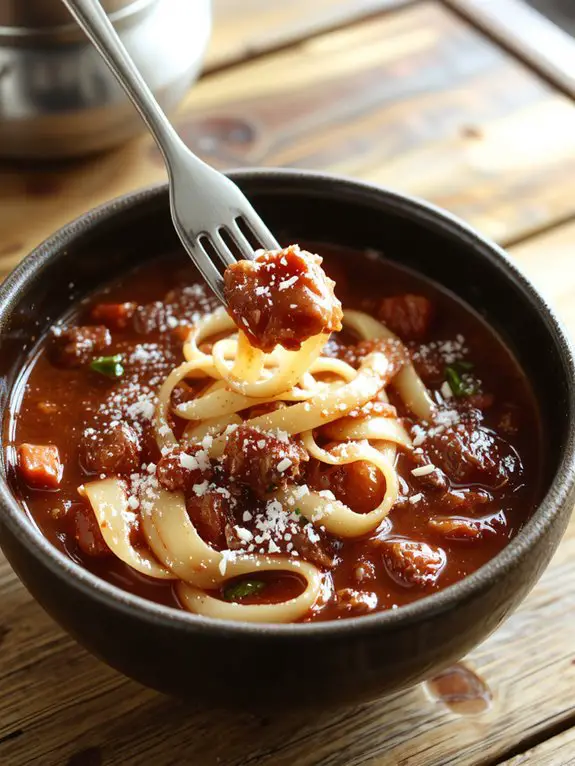
- Serve over al dente pasta, freshly cooked and tossed with a bit of sauce. Reserve pasta water to adjust the sauce’s consistency if needed. Pro tip: Finish with grated Parmesan and fresh parsley for a classic touch.
- Store leftovers in an airtight container for up to 3 days or freeze for future meals. The flavors deepen overnight, making it even more delicious the next day!
Nutrition
This homemade Bolognese recipe is a hearty and flavorful dish. Below is the nutritional breakdown per serving.
| Nutrient | Amount |
|---|---|
| Calories | 320 |
| Total Fat | 12g |
| Saturated Fat | 4g |
| Cholesterol | 45mg |
| Sodium | 480mg |
| Total Carbohydrate | 25g |
| Dietary Fiber | 4g |
| Sugars | 7g |
| Protein | 22g |
Chef Tips
Though Bolognese seems simple, a few key tricks can elevate it from good to unforgettable. I always sauté my soffritto low and slow to build depth of flavor.
Use a mix of ground meats—beef, pork, and veal—for richness. Deglaze with wine or milk for complexity, and simmer it gently for hours.
Finish with a splash of cream to balance acidity. Don’t skimp on time—it’s worth it.
Frequently Asked Questions
Can I Freeze Bolognese Sauce?
Yes, I freeze bolognese sauce all the time. I let it cool completely, then portion it into airtight containers or freezer bags, leaving some space for expansion. It keeps well for up to three months.
What Wine Pairs Best With Bolognese?
I’d pair Bolognese with a medium-bodied red wine like Chianti or Sangiovese. They’ve got the acidity to cut through the richness and enhance the flavors. If I prefer something smoother, a Merlot works perfectly too.
Is Bolognese Sauce Gluten-Free?
Bolognese sauce isn’t always gluten-free—it depends on the ingredients I use. If I avoid flour or gluten-containing additives, it can be gluten-free, but I always check labels and recipes to confirm it’s safe for gluten-sensitive people.
How Long Does Bolognese Sauce Last in the Fridge?
I’ve found Bolognese sauce lasts up to 5 days in the fridge if stored in an airtight container. To keep it fresh, I always cool it quickly and make sure it’s tightly sealed before refrigerating.
Can I Use Ground Turkey Instead of Beef?
Yes, you can use ground turkey instead of beef. It’s leaner and lighter, so I’ll add extra olive oil or broth to keep it moist. The flavor’s milder, but I’ll boost it with herbs and spices.


