The Best Homemade Chicken Stock Recipe

Recipe
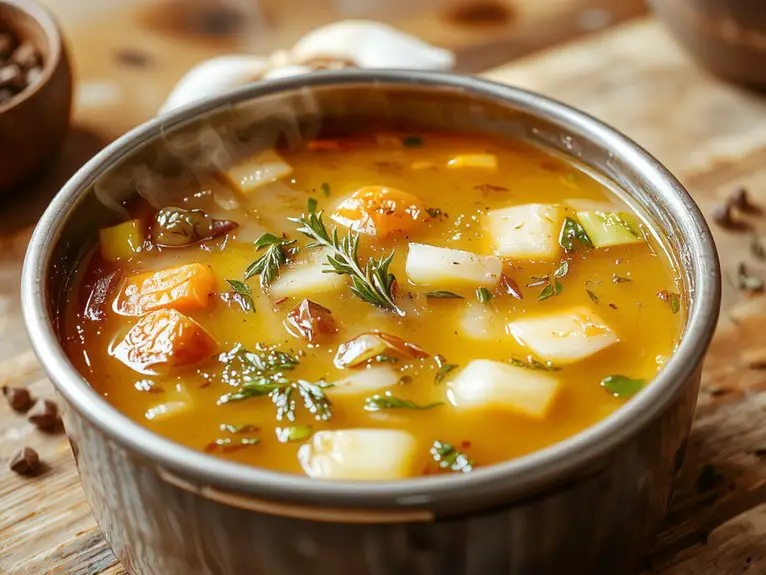
There’s nothing quite like the rich, savory depth of homemade chicken stock—it’s the secret weapon in your kitchen that turns good dishes into unforgettable ones. Forget the bland, store-bought stuff; this recipe delivers a golden, aromatic broth with layers of flavor that’ll make your soups, risottos, and sauces sing.
The magic? Simmering a mix of chicken bones, fresh veggies, and herbs low and slow until every drop is packed with soul-warming goodness. Trust me, once you taste the difference, you’ll never go back to the carton.
Plus, it’s ridiculously easy to make—just toss everything in a pot and let time do the work. Your future self (and your cooking) will thank you.
Ingredients
Making homemade chicken stock is all about maximizing flavor, and the right ingredients can elevate your broth from good to exceptional. Start with the basics, but don’t shy away from adding depth with aromatic veggies and herbs. Here’s what you’ll need:
- Chicken bones or carcass: The backbone of your stock—use leftover rotisserie chicken bones, roasted bones, or raw chicken pieces for a richer flavor. Roasted bones add depth, but raw works perfectly fine.
- Carrots: Adds sweetness; peeling isn’t necessary, but scrubbing is a must.
- Celery: Lends a subtle earthy note. Include the leaves for extra flavor.
- Onions: A non-negotiable for savory richness. Leave the skin on for a golden hue.
- Garlic: Adds a warm, aromatic undertone. Use whole cloves for subtle flavor.
- Bay leaves: Essential for depth—don’t skip them!
- Parsley: Fresh parsley stems are ideal for brightness.
- Thyme: Fresh sprigs add complexity; dried works in a pinch (use sparingly).
- Peppercorns: Adds gentle heat; avoid ground pepper, which can make the stock cloudy.
- Cold water: Use filtered water for the cleanest taste.
Pro Tips:
- For a richer stock, add chicken feet or necks—they’re packed with collagen for a silky texture.
- No fresh herbs? Substitute with dried, but reduce the quantity by half.
- Avoid starchy veggies like potatoes—they can muddy the broth.
Extras That Elevate:
- Leeks or shallots for extra depth.
- A splash of apple cider vinegar to help extract minerals from the bones.
- Parmesan rind for a savory boost (add at the end).
Flexibility is key—use what you have on hand, but keep that bay leaf and onion in the mix for a truly standout stock.
How to Make the Best Perfect Chicken Stock Method

– Prepare Your Ingredients: Start by roughly chopping onions, carrots, and celery into large chunks. No need to peel the carrots or onions—their skins add extra flavor and nutrients.
If you’re using chicken bones, roast them first for about 20 minutes at 400°F (200°C) to deepen the flavor.
– Combine Ingredients in a Pot: Place the chicken bones, vegetables, and aromatics like garlic, bay leaves, and peppercorns into a large stockpot.
Add enough cold water to cover everything by about 2 inches. Using cold water helps extract flavors slowly and evenly.
– Simmer, Don’t Boil: Bring the mixture to a gentle simmer over medium heat. Avoid boiling, as it can make the stock cloudy and overly greasy.
Skim off any foam or impurities that rise to the surface during the first 10-15 minutes to guarantee a clear, clean broth.
- Add Herbs Later: Toss in fresh herbs like parsley, thyme, or rosemary about 30 minutes before the stock is done. Adding them too early can result in bitterness.
- Simmer for Hours: Let the stock simmer for at least 3-4 hours, or up to 6-8 hours for maximum flavor extraction.
Keep an eye on the water level and add more if it drops too low.
– Strain and Cool: Once the stock is rich and aromatic, remove it from the heat. Strain it through a fine-mesh sieve or cheesecloth into a large bowl or pot to remove all solids.
Let it cool slightly before transferring to jars or containers.
- Skim the Fat: After cooling, skim off any fat that rises to the surface. For a richer flavor, you can leave some fat, but removing most of it makes for a cleaner, lighter stock.
- Store Properly: Refrigerate the stock for up to 5 days or freeze it in portions for up to 6 months. Use ice cube trays for smaller amounts perfect for soups, sauces, or risottos.
Pro Tip: If you’re short on time, use a pressure cooker—it can reduce cooking time to just 1 hour while still yielding deep, flavorful stock.
Watch Out: Avoid adding salt during the cooking process. Season your dishes later to control the sodium level and prevent over-salting.
Nutrition
Chicken stock is a nutritious base for many dishes, rich in protein and minerals. Here’s the nutritional breakdown per cup (240ml) serving:
| Nutrient | Amount |
|---|---|
| Calories | 86 |
| Protein | 6g |
| Fat | 3g |
| Carbohydrates | 8g |
| Sodium | 350mg |
| Potassium | 250mg |
Chef Tips
Quality chicken stock relies on attention to detail. I always start with cold water to extract flavors gradually.
Don’t rush the simmer—it should bubble gently for 4-6 hours. Skimming impurities secures a cleaner taste.
Roasting bones deepens flavor, but avoid burning. Adding aromatics like garlic and herbs boosts complexity.
Cool quickly and strain twice for clarity. Patience and precision make all the difference.
Frequently Asked Questions
How Long Can Homemade Chicken Stock Be Stored?
I can store homemade chicken stock in the fridge for up to four days if it’s covered tightly. If I freeze it, it’ll last for about three months, and I’ll use airtight containers or freezer bags.
Can I Freeze Chicken Stock?
Yes, I can freeze chicken stock! I just pour it into airtight containers or freezer bags, leaving some space for expansion. It’ll last up to 6 months frozen, and I thaw it overnight in the fridge.
What Can I Substitute for Chicken Bones?
I’d swap chicken bones with beef or pork bones if I’ve got them, or use leftover roasted chicken carcass, turkey bones, or even vegetable scraps like onion, carrot, and celery ends for a quick alternative.
Is Chicken Stock the Same as Chicken Broth?
Chicken stock and broth aren’t the same. I make stock with bones for richer flavor and gelatin, while broth uses meat for a lighter taste. Stock’s great for sauces, but broth’s better for sipping.
Can I Use Vegetable Scraps for Flavor?
Absolutely, I can use vegetable scraps to add flavor! Carrot peels, onion skins, celery ends, and herb stems work great. Just avoid bitter or overly strong scraps like broccoli or cabbage to keep the taste balanced.


