The Best Homemade Italian Dressing Recipe

Recipe
This homemade Italian dressing is a game-changer—once you try it, you’ll never go back to store-bought again. It’s the perfect blend of tangy, herby, and just a touch of sweetness, with fresh garlic, oregano, and a splash of red wine vinegar creating a flavor that’s bright and unforgettable.
I’ve been making this for years, whether for crisp salads, marinating chicken, or drizzling over roasted veggies, and it never disappoints. The secret? Using quality olive oil and letting the flavors meld together for at least an hour—trust me, it makes all the difference.
Smooth, zesty, and packed with bold Mediterranean vibes, this dressing is so easy to whip up, you’ll wonder why you ever bought it in a bottle.
Ingredients
The secret to an irresistible homemade Italian dressing lies in the quality and balance of its ingredients. Fresh, simple components come together to create a tangy, herby, and slightly sweet flavor that beats any store-bought version. Here’s what you’ll need, along with some insider tips to make it shine:
- Extra-virgin olive oil – The foundation of the dressing. Use a high-quality oil for richness and depth. (Substitute: Avocado oil, but it will slightly alter the flavor.)
- Red wine vinegar – Adds the signature tang. Fresh vinegar guarantees brightness. (Substitute: White wine vinegar or apple cider vinegar for a milder taste.)
- Garlic – Freshly minced garlic is non-negotiable for that punchy, aromatic kick.
- Dijon mustard – Acts as an emulsifier and adds a subtle sharpness. Don’t skip it!
- Honey – Balances the acidity with a touch of sweetness. (Substitute: Maple syrup or agave for a vegan option.)
- Dried oregano – A classic Italian herb that brings earthy warmth. Fresh oregano works too, but use double the amount.
- Dried basil – Adds a sweet, herbal note. (Substitute: Fresh basil if you have it.)
- Onion powder – Enhances the savory depth without overpowering. (Substitute: Freshly grated onion for a sharper flavor.)
- Salt and black pepper – Essential for seasoning. Adjust to taste.
- Crushed red pepper flakes – Optional, but a pinch adds a subtle heat.
Little Win: Add a splash of fresh lemon juice or a teaspoon of lemon zest for an extra bright finish.
How to Make the Best Authentic Italian Dressing Recipe

- Gather your ingredients and tools. Having everything pre-measured and ready will make the process smoother. Make sure your olive oil is of good quality for the best flavor.
- Combine the wet ingredients. In a medium bowl, whisk together olive oil, red wine vinegar, and lemon juice. The acidity of the vinegar and lemon juice balances the richness of the oil.
- Add the dry ingredients. Sprinkle in garlic powder, onion powder, dried oregano, dried basil, sugar, salt, and black pepper. These spices are the heart of the dressing, so don’t skip any!
- Whisk until emulsified. Vigorously whisk the mixture until the oil and vinegar are fully combined and the spices are evenly distributed. This creates a smooth, cohesive dressing.
- Taste and adjust. Give it a quick taste and add more salt, pepper, or sugar if needed. Personalize it to your liking—some prefer it tangier, others sweeter.
- Store in a jar or bottle. Transfer the dressing to an airtight container and shake well before each use. It keeps well in the fridge for up to a week.
- Shake before serving. The ingredients may separate over time, so a quick shake guarantees a consistent flavor and texture.
Pro Tip: For a fresher flavor, swap dried herbs for fresh ones—just double the amount since fresh herbs are less concentrated.
Watch-Out Warning: Avoid using metal bowls or utensils with acidic ingredients like vinegar and lemon juice, as they can react and alter the taste. Opt for glass or ceramic instead.
Nutrition
This homemade Italian dressing is not only flavorful but also offers a balanced nutritional profile. Here’s a breakdown of its nutritional content per serving:
| Nutrition | Amount per Serving |
|---|---|
| Calories | 150 kcal |
| Total Fat | 15g |
| Saturated Fat | 2g |
| Cholesterol | 0mg |
| Sodium | 300mg |
| Total Carbohydrates | 3g |
| Dietary Fiber | 0g |
| Sugars | 2g |
| Protein | 0g |
Chef Tips
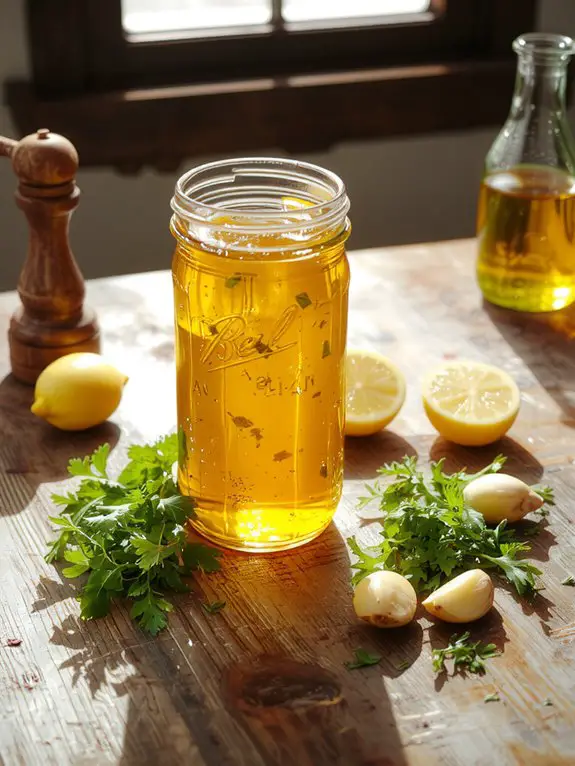
Often, I’ll whisk the dressing directly in a mason jar—it’s quick, easy, and lets me store it right away. For extra flavor, toast dried herbs briefly before adding.
Taste as you go; adjust acidity with lemon or sweetness with honey. Emulsify slowly for a silky texture.
Let it sit 30 minutes before serving to meld flavors. Shake well before each use.
Frequently Asked Questions
Can I Use Dried Herbs Instead of Fresh?
I can use dried herbs instead of fresh, but I’ll need less since they’re more concentrated. For every tablespoon of fresh herbs, I’ll use one teaspoon of dried to guarantee the flavor isn’t overpowering.
How Long Does Homemade Italian Dressing Last?
I keep my homemade Italian dressing fresh for about a week when stored in the fridge in an airtight container. If I notice any odd smells or changes, I toss it to stay safe.
Can I Substitute Olive Oil With Another Oil?
Yes, I can substitute olive oil with another oil if needed. I’d use avocado, grapeseed, or sunflower oil for a similar texture, but the flavor might change slightly. I’ll avoid heavy oils like coconut for this recipe.
Is This Dressing Gluten-Free?
Yes, the dressing is gluten-free as long as I use gluten-free vinegar and check labels on other ingredients. I always verify my recipe doesn’t include wheat-based products to keep it safe for gluten-free diets.
Can I Make This Dressing Without Vinegar?
Yes, you can make it without vinegar—just swap it for lemon juice. I’d suggest using equal parts, but taste as you go since lemon’s tang differs. It’ll still give that bright, zesty kick you’re after.


