The Best Homemade Japchae Recipe
Recipe
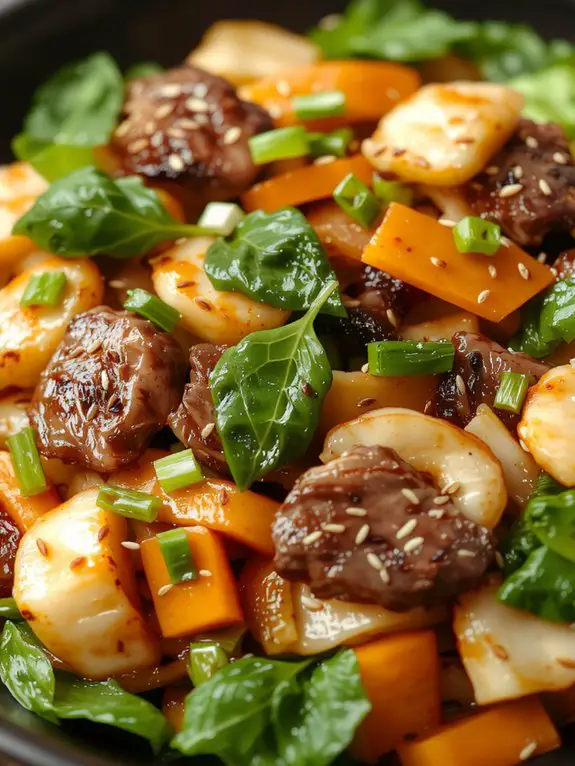
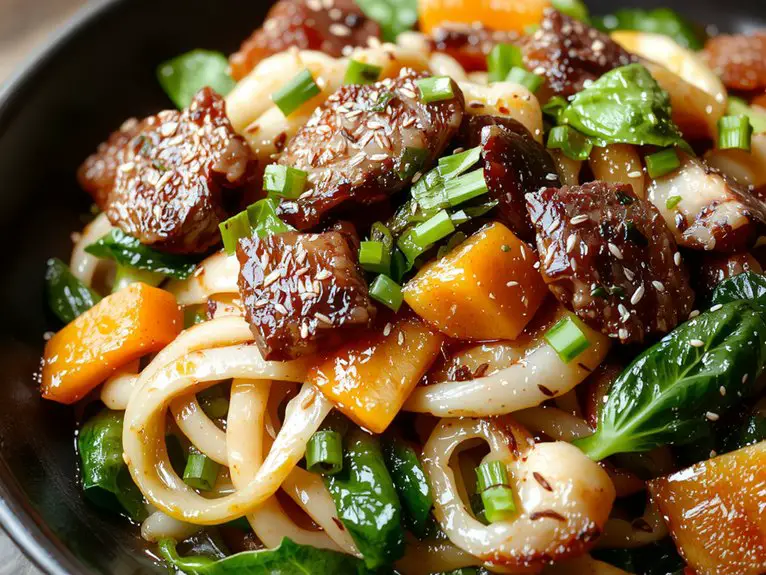
There’s something magical about japchae—the way the chewy sweet potato noodles soak up the savory-sweet sauce, the crisp veggies adding freshness, and that irresistible sesame aroma that fills your kitchen. This isn’t just another stir-fry; it’s a dish that balances textures and flavors so perfectly, you’ll want to make it on repeat.
Skip the takeout because once you try this homemade version, loaded with tender beef (or mushrooms for a veg twist) and glossy, perfectly seasoned noodles, you’ll never go back.
Pro tip: Don’t skimp on the sesame oil—it’s the secret weapon that makes every bite sing. Trust me, your chopsticks will be fighting for the last bite.
Ingredients
Japchae is all about balance—chewy noodles, vibrant vegetables, and a savory-sweet sauce that ties it all together. The key is using high-quality ingredients for the best texture and flavor. Here’s what you’ll need to make this classic Korean dish:
For the Noodles:
– 200g sweet potato starch noodles (dangmyeon) – Non-negotiable! These give Japchae its signature chewy texture.
Pro Tip: Look for Korean brands like CJ or Ottogi for authenticity.
For the Sauce:
- 4 tbsp soy sauce (use low-sodium for better control of flavor)
- 2 tbsp sesame oil – A must for that nutty aroma.
- 2 tbsp sugar (adjust to taste)
- 1 tbsp minced garlic – Fresh is best for bold flavor.
Substitution: Brown sugar or honey can replace granulated sugar for a deeper sweetness.
For the Vegetables (feel free to mix and match):
- 1 medium carrot, julienned
- 1 red bell pepper, thinly sliced
- 1 cup spinach (blanched) – Adds a pop of green and a soft texture.
- 1 medium onion, thinly sliced
- 4-5 shiitake mushrooms (fresh or dried and rehydrated) – Their umami flavor is essential.
Pro Tip: Slice the mushrooms thinly for even cooking.
For the Protein (optional but recommended):
– 200g sirloin beef or chicken, thinly sliced
Substitution: Tofu works great for a vegetarian option.
For Garnish:
- 2 tbsp toasted sesame seeds – Don’t skip these; they add crunch and a nutty finish.
- 2 green onions, thinly sliced – For a fresh, vibrant touch.
Little Wins: Use a mix of colorful vegetables to make the dish visually appealing. A splash of extra sesame oil at the end boosts flavor!
How to Make the Best Authentic Japchae Technique
Prepare the noodles:
Cook the sweet potato starch noodles (dangmyeon) according to the package instructions until tender but still slightly chewy. Rinse them under cold water to stop the cooking process and prevent sticking.
Toss with a bit of sesame oil to maintain their separation and glossy appearance.
Prep the vegetables:
Slice the carrots, spinach, mushrooms, and onions thinly and uniformly for even cooking. Blanch the spinach briefly in boiling water, then rinse in cold water and squeeze out excess moisture.
This step guarantees vibrant color and removes bitterness.
Cook the protein:
Thinly slice the beef (or chicken/tofu) and marinate it in a mix of soy sauce, sugar, and sesame oil for at least 10 minutes. Stir-fry over high heat until just cooked through, then set aside.
This prevents overcooking when combined later.
Stir-fry the vegetables:
Heat a large pan or wok with a splash of oil. Cook the carrots first, as they take the longest, followed by the onions and mushrooms. Keep them slightly crunchy for texture. Season lightly with salt and pepper.
Combine everything:
In the same pan, toss the cooked noodles, vegetables, and protein together. Add a sauce made of soy sauce, sugar, sesame oil, and a pinch of sesame seeds. Stir gently to coat evenly without breaking the noodles.
Final touches:
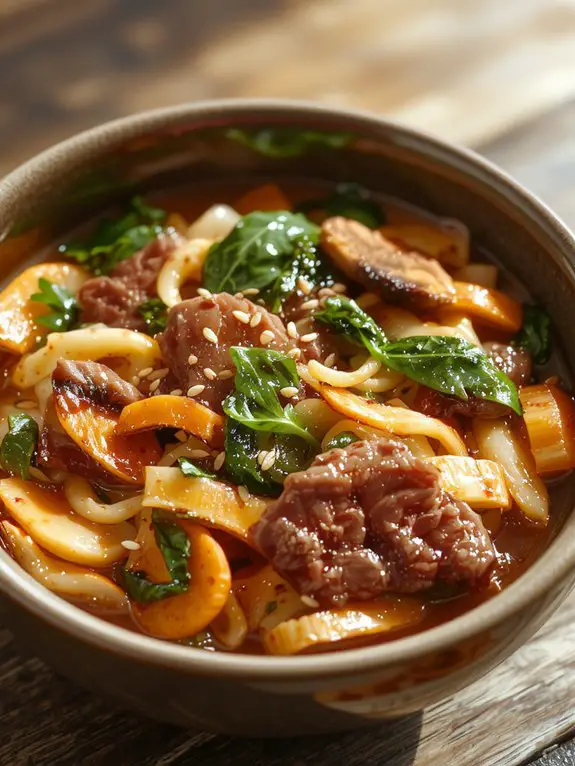
Taste and adjust seasoning if needed. Garnish with toasted sesame seeds and thinly sliced green onions for a fresh finish. Serve warm or at room temperature for the best flavor.
Pro Tips:
- Use tongs to mix the noodles gently and avoid them clumping together.
- Blanching the spinach quickly preserves its vibrant green color and reduces bitterness.
- For a vegetarian version, skip the meat and add extra mushrooms or tofu for protein.
- Japchae tastes even better the next day as the flavors meld—make extra for leftovers!
Nutrition
Japchae is a healthy and flavorful dish that offers a balance of nutrients.
Here is the nutritional breakdown for a typical serving:
Nutrient | Amount per Serving
Calories | 250
Protein | 8g
Carbohydrates | 40g
Fat | 7g
Fiber | 4g
Sodium | 300mg
Chef Tips
When making japchae, I always recommend soaking the glass noodles in hot water until they’re just pliable but not fully softened, as they’ll continue to cook when stir-fried.
I also suggest cooking the vegetables separately to maintain their texture and color.
Marinate the beef with soy sauce, sugar, and sesame oil for at least 15 minutes.
Finally, toss everything together gently to avoid breaking the noodles.
Frequently Asked Questions
Can I Use Rice Noodles Instead of Sweet Potato Starch Noodles?
Yes, you can use rice noodles instead, but they won’t have the same chewy texture as sweet potato starch noodles. I’d suggest cooking them al dente so they don’t get too soft when mixed with the other ingredients.
How Long Does Homemade Japchae Last in the Fridge?
I usually store my homemade japchae in an airtight container, and it lasts up to 3 to 4 days in the fridge. I make sure to keep it chilled and check for any odd smells before eating.
Can Japchae Be Served Cold or Only Warm?
Japchae can be served both cold and warm, and I love it either way. It’s often enjoyed at room temperature or chilled, but warming it up brings out the flavors, especially if it’s fresh or reheated.
Is Japchae Gluten-Free and Vegan?
Japchae can be gluten-free if you use tamari instead of soy sauce and check your noodles, but it’s not always vegan—some recipes include meat or eggs. I’d swap those for tofu and mushrooms to make it vegan-friendly.
What Are Common Side Dishes to Pair With Japchae?
I’d pair japchae with kimchi, steamed mandu, or japgok bap for balance. Sometimes I add seaweed salad or fried zucchini for crunch. A simple miso soup works well too, rounding out the meal perfectly.


