The Best Homemade Kimchi Recipe
Recipe
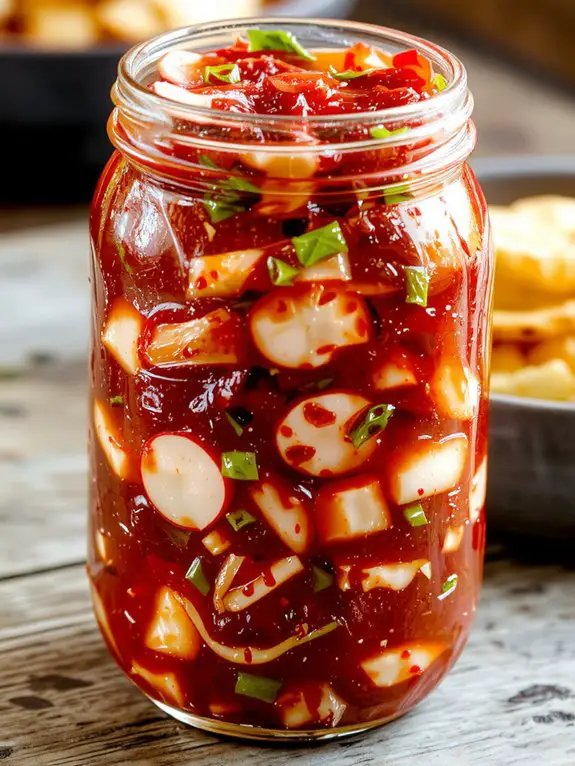
There’s nothing quite like the bold, tangy kick of homemade kimchi—and once you try this recipe, you’ll never go back to store-bought. Packed with crisp, fermented cabbage, spicy gochugaru, and a punch of garlic and ginger, this kimchi is a flavor explosion that’ll have you sneaking bites straight from the jar.
I’ve tweaked this recipe over the years to strike the perfect balance of spicy, sour, and umami, and trust me, it’s foolproof. Whether you’re a kimchi newbie or a fermenting pro, this version delivers that addictive crunch and deep, complex taste you crave.
Plus, there’s something incredibly satisfying about watching those jars bubble away, knowing you’ve created something truly special. Get ready to fall in love with every fizzy, fiery bite.
Ingredients
Creating the perfect kimchi starts with the right ingredients, which bring the signature tangy, spicy, and umami-packed flavors to life. While some items are non-negotiable, there’s room for flexibility to make it work with what you’ve got. Here’s what you’ll need:
- Napa cabbage (1 large head): The star of the show. Its tender leaves and crunchy stems are perfect for fermenting. Don’t skip this!
- Coarse sea salt (½ cup): Essential for drawing out moisture and prepping the cabbage for fermentation. Avoid iodized salt—it can interfere with the process.
- Korean chili flakes (gochugaru, ½ cup): This is what gives kimchi its signature red hue and spicy kick. If you can’t find it, regular chili flakes will work, but the flavor won’t be the same.
- Fish sauce (3 tbsp): Adds depth and umami. For a vegetarian version, swap with soy sauce or a mix of soy sauce and kelp powder.
- Garlic (6 cloves, minced): A must-have for that pungent, savory backbone. Fresh is best—no substitutes here.
- Ginger (1 tbsp, minced): Adds a warm, earthy note. Fresh ginger is key for the right flavor profile.
- Sugar (1 tbsp): Helps kickstart fermentation. Honey or agave syrup can be used as alternatives.
- Daikon radish (1 small, julienned): Adds crunch and a peppery flavor. No daikon? Substitute with carrots or jicama.
- Green onions (3-4, chopped): Brings freshness and a mild oniony bite. Regular onions or chives can work in a pinch.
- Optional add-ins: Shrimp paste for extra umami, or pear or apple for natural sweetness to balance the spice.
Pro tip: Always use fresh, high-quality ingredients—the fermentation process amplifies their flavors, so starting with the best guarantees a standout result.
How to Make the Best Traditional Napa Cabbage Kimchi
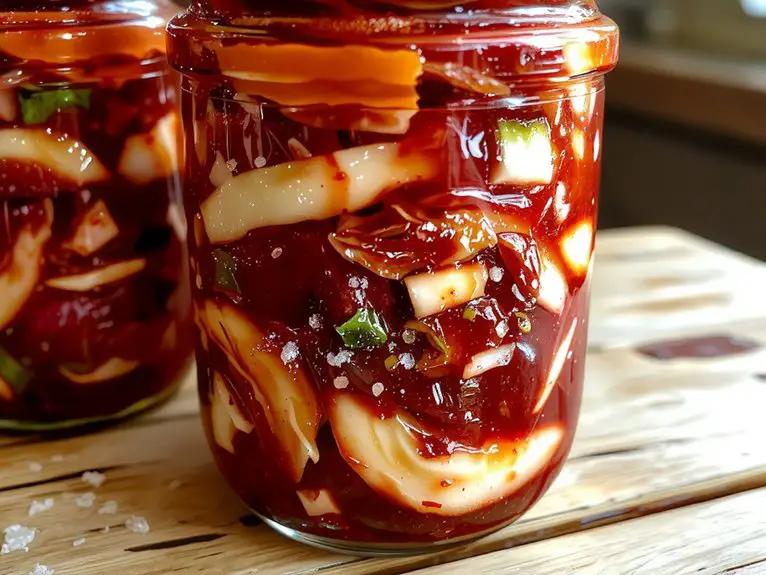
Let it ferment. Seal the jar and let it sit at room temperature for 1-2 days, depending on your taste.
Check daily for bubbling, which is a sign of active fermentation. Once it reaches your desired tanginess, move it to the refrigerator to slow the process.
Don’t rush this step—fermentation builds the signature flavor.
Nutrition
Homemade kimchi is a nutritious dish packed with vitamins and minerals. Here is the nutritional breakdown per serving:
| Nutrient | Amount per Serving |
|---|---|
| Calories | 23 |
| Protein | 1g |
| Carbohydrates | 4g |
| Fiber | 1g |
| Fat | 0g |
| Sodium | 498mg |
| Vitamin C | 18% DV |
| Vitamin K | 55% DV |
| Iron | 4% DV |
Chef Tips
When it comes to making kimchi, I’ve found that the key to success lies in preparation and patience. Always use fresh, high-quality ingredients, especially the napa cabbage and Korean chili flakes.
Salt the cabbage thoroughly but rinse it well to avoid over-salting.
Ferment in a cool, dark place, and taste daily to monitor progress.
Don’t rush—savor the process and trust your instincts.
Frequently Asked Questions
How Long Does Homemade Kimchi Last in the Fridge?
Homemade kimchi lasts about 1–6 months in the fridge. I’ve found it stays fresh longer if I keep it sealed tight. The flavor gets stronger over time, but if it smells off, I toss it.
Can I Make Kimchi Without Fish Sauce?
Yes, I can make kimchi without fish sauce. I’d substitute it with soy sauce, miso paste, or a mix of salt and water for umami flavor. It won’t taste exactly the same, but it’ll still be delicious.
Why Is My Kimchi Not Fermenting?
My kimchi’s not fermenting because the salt level’s too high, the temperature’s too cold, or I didn’t use enough starter like raw cabbage or old kimchi juice. I’ll check these to get it bubbling.
Is Kimchi Safe to Eat if It Smells Sour?
Yes, kimchi’s safe to eat if it smells sour—it’s a sign of fermentation. I’d check for mold or off-putting odors, but that tangy, sour scent usually means it’s developing its signature flavor. Trust your instincts!
Can I Use a Different Type of Cabbage for Kimchi?
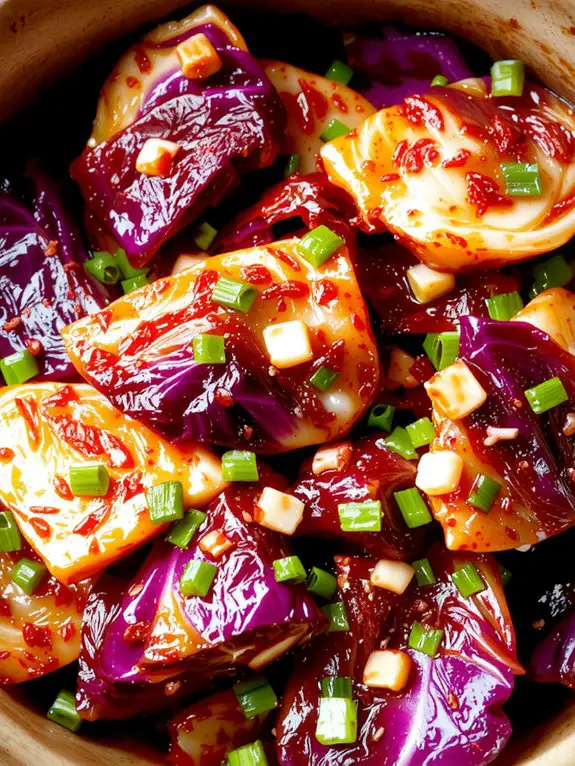
Yes, you can use different cabbages for kimchi! I’ve tried napa, savoy, and even red cabbage—they all work. Just adjust the salt time since some are tougher. It’ll still taste great, just a bit different.


