The Best Homemade Kung Pao Chicken Recipe
Recipe
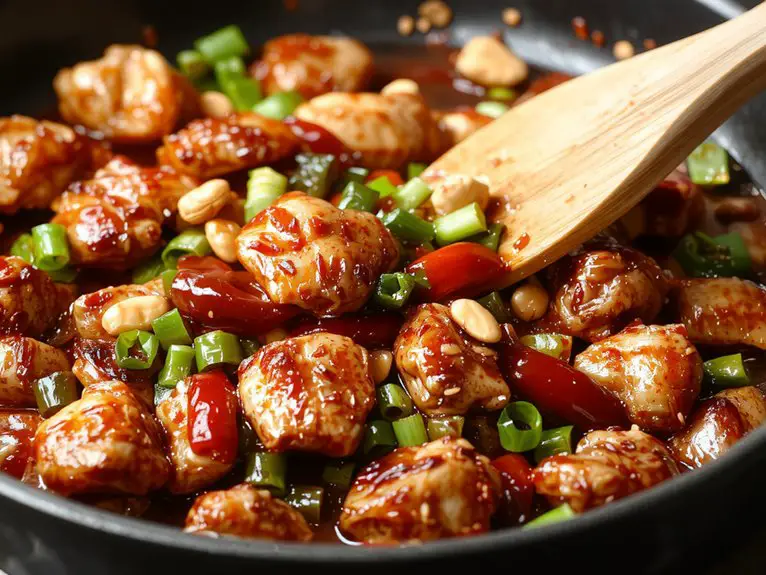
Get ready to elevate your stir-fry game because this Kung Pao Chicken recipe is a flavor explosion you’ll want to make on repeat.
What sets it apart? The perfect harmony of tender chicken, crunchy peanuts, and that irresistibly tangy-sweet sauce with just the right kick of heat.
Trust me, once you taste the way the toasted Sichuan peppercorns and fresh ginger infuse every bite, you’ll never settle for takeout again.
This dish is all about balance—spicy, savory, and a little bit addictive. Plus, it’s quicker to whip up than waiting for delivery!
Ingredients
To nail the perfect Kung Pao Chicken, you need a balance of textures and bold flavors—crispy chicken, crunchy peanuts, and that iconic sweet-spicy sauce. Fresh ingredients make all the difference, but we’ve got smart swaps if you’re in a pinch.
For the Chicken:
- 1 lb boneless, skinless chicken thighs (or breasts, but thighs stay juicier)
- 1 tbsp soy sauce (light or dark—dark adds depth)
- 1 tbsp Shaoxing wine (sub dry sherry or omit if needed)
- 1 tbsp cornstarch (key for that crispy exterior)
For the Sauce:
- 2 tbsp soy sauce (don’t skip—this is the umami backbone)
- 1 tbsp Chinkiang vinegar (or balsamic in a pinch, but the tang is non-negotiable)
- 1 tbsp hoisin sauce (sub oyster sauce for a different richness)
- 1 tsp sugar (balances the heat—adjust to taste)
- 1 tsp cornstarch (thickens the sauce to glossy perfection)
For the Stir-Fry:
- 2 tbsp neutral oil (like peanut or vegetable—high smoke point is essential)
- 4-6 dried red chilies (adjust for heat; Sichuan chilies are ideal)
- 3 garlic cloves, minced (fresh only—powder won’t cut it)
- 1-inch ginger, grated (adds a bright, peppery kick)
- 1/2 cup roasted peanuts (unsalted; cashews work too, but peanuts are classic)
- 2 scallions, chopped (for freshness and color)
Pro Tip: Toast the peanuts in a dry pan first—it amps up their crunch and nuttiness. And if you can find Sichuan peppercorns, add 1/2 tsp for that signature tingly heat!
How to Make the Best Authentic Kung Pao Chicken
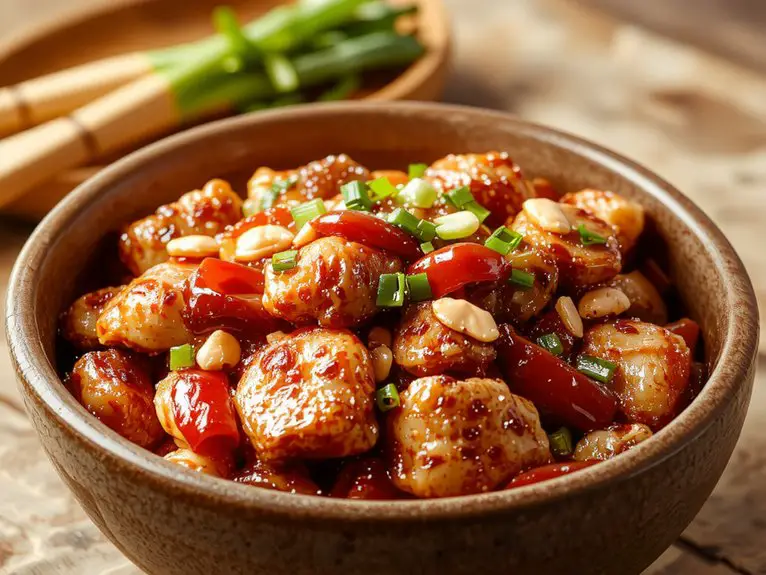
• Finish with peanuts and scallions.
Off heat, mix in ½ cup roasted peanuts and 2 sliced scallions. The residual heat wilts the scallions slightly.
*Pro tip:* Add peanuts last to keep them crunchy.
Serve immediately over rice.
Nutrition
Kung Pao Chicken is a flavorful dish that balances protein and vegetables, creating a nutritious meal. Below is the nutritional breakdown for a single serving.
| Nutrient | Amount per Serving |
|---|---|
| Calories | 350 kcal |
| Protein | 30 g |
| Carbohydrates | 15 g |
| Fat | 18 g |
| Saturated Fat | 3 g |
| Fiber | 2 g |
| Sugar | 6 g |
| Sodium | 800 mg |
Chef Tips
When preparing Kung Pao Chicken, I always recommend toasting the Sichuan peppercorns and dried chilies first—it releases their aroma and deepens the dish’s flavor.
Use high heat for stir-frying to lock in the chicken’s juiciness.
Don’t skip the cornstarch marinade; it tenderizes the meat.
Balance sweet, sour, and spicy flavors by adjusting sugar, vinegar, and chili paste.
Garnish with peanuts just before serving for crunch.
Frequently Asked Questions
Can I Use Tofu Instead of Chicken for a Vegetarian Version?
Yes, I’d use tofu instead of chicken for a vegetarian version. I’d press and cube firm tofu, then stir-fry it until crispy. It absorbs the sauce well and gives a similar texture to traditional Kung Pao.
How Do I Make the Dish Less Spicy Without Losing Flavor?
To make it less spicy, I’d reduce or skip the chili flakes and use a mild chili paste instead. I’d balance it with extra garlic, ginger, and a touch of honey to keep the flavor rich without the heat.
Can I Substitute Peanuts With Another Nut?
Yes, I can use cashews or almonds instead of peanuts. They’re equally crunchy and add a rich flavor. Cashews blend well with the dish, while almonds give a nuttier taste. Just toast them lightly for extra depth.
Is There a Gluten-Free Alternative for Soy Sauce?
I’d use tamari instead—it’s gluten-free and tastes just like soy sauce. Coconut aminos work too if you want something milder. Both swap easily, so you won’t miss the original flavor in your dish.
How Long Can I Store Leftovers in the Fridge?
I’d store leftovers in the fridge for up to 3-4 days. Make sure they’re in an airtight container to stay fresh. If I need longer storage, I’d freeze them for up to 3 months.


