The Best Homemade Ramen Recipe
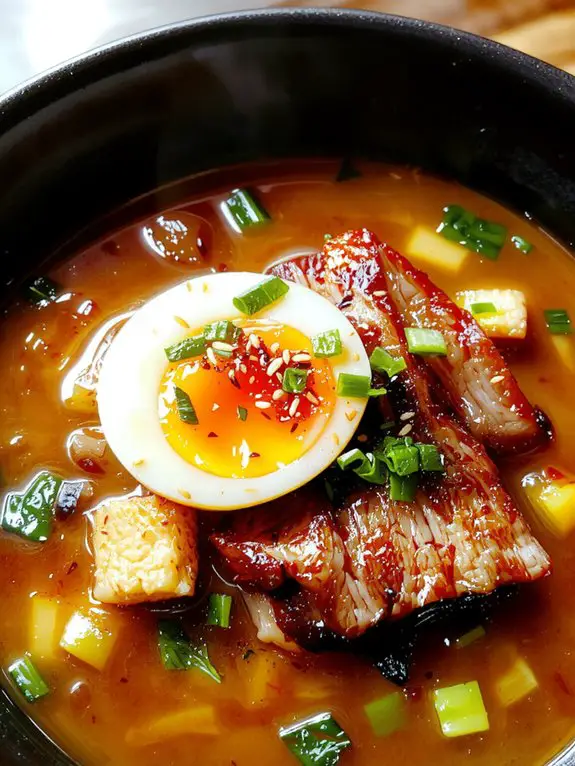
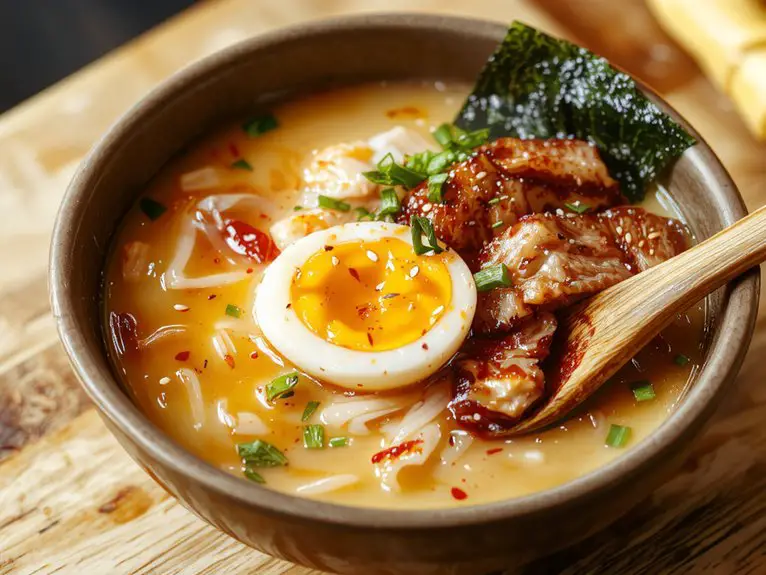
Recipe
There’s something magical about a bowl of homemade ramen—rich, savory broth, tender noodles, and toppings that make every bite an adventure. Forget the instant stuff; this recipe is the real deal, and once you try it, you’ll never look back.
The secret? A deeply flavorful broth simmered with aromatics and a touch of umami magic, paired with chewy noodles and your favorite toppings. Imagine this: a steaming bowl with silky broth, perfectly cooked eggs, crisp veggies, and maybe even some melt-in-your-mouth chashu pork.
It’s restaurant-quality ramen, but made in your kitchen with love (and way cheaper). Trust me, this is the kind of meal that turns an ordinary night into something special. Let’s get cooking!
Ingredients
Homemade ramen is all about layering flavors, and the right ingredients can make or break your broth. While it’s flexible enough to adapt to what you have on hand, a few key elements will take your ramen from good to slurp-worthy. Here’s what you’ll need, plus insider tips to get it just right:
For the Broth (The Heart of Ramen):
- Chicken or pork bones: Opt for bones with cartilage for a richer, gelatinous broth. (Vegetarian? Use kombu and dried shiitake mushrooms for umami depth.)
- Garlic and ginger: Fresh is non-negotiable—sauté them first to release their full flavor potential.
- Soy sauce or miso paste: Miso adds a complex, salty-sweet base, while soy sauce keeps it classic. (Tip: White miso for milder flavor, red miso for boldness.)
- Fish sauce (optional): A splash adds a subtle savory depth—trust me, it’s worth it.
For the Noodles:
– Fresh or dried ramen noodles: Fresh noodles are ideal, but dried ramen noodles (not instant) work great too. (Skip the seasoning packet if using instant.)
For the Toppings (Customizable, but don’t skip these essentials):
- Soft-boiled eggs: Marinate them in soy sauce and mirin for a jammy, flavorful center. (Pro tip: Use cold eggs to avoid overcooking.)
- Chashu pork or chicken: Slowly braised pork belly is traditional, but shredded rotisserie chicken is a quick swap.
- Green onions: Thinly sliced for a fresh, sharp bite.
- Nori (seaweed): Adds a briny, oceanic note—don’t skip it!
- Sesame oil: A drizzle at the end for nutty aroma.
Optional Extras (Little Wins for Flair):
- Corn kernels: Sweetness balances the savory broth.
- Bean sprouts: Adds crunch and freshness.
- Chili oil or sriracha: For a spicy kick if desired.
- Bamboo shoots or wood ear mushrooms: For texture and authenticity.
Substitutions are welcome, but invest in quality broth ingredients—they’re the backbone of this dish. Fresh toppings and a well-seasoned broth will make your ramen shine.
How to Make the Best Classic Tonkotsu Ramen Recipe
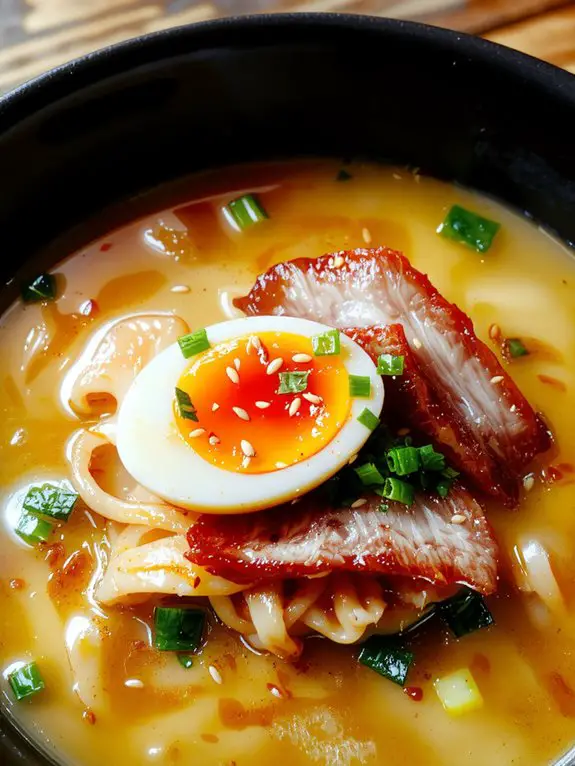
- Assemble the ramen: Once the broth is ready, strain it through a fine-mesh sieve to remove any solids. Season with soy sauce, salt, and a touch of sesame oil to taste.
- Place the cooked noodles in a bowl, pour the hot broth over them, and arrange the toppings—soft-boiled egg, green onions, chashu pork, and any additional ingredients like seaweed or bamboo shoots.
- Serve immediately: Ramen is best enjoyed fresh and piping hot. Garnish with a sprinkle of sesame seeds or chili oil for extra flavor, if desired.
- Watch out: Letting the noodles sit too long in the broth can cause them to become soggy.
Nutrition
This homemade ramen recipe is packed with nutrients and flavor. Below is the nutritional breakdown per serving.
| Nutrient | Amount per Serving |
|---|---|
| Calories | 450 kcal |
| Protein | 20 g |
| Carbohydrates | 60 g |
| Fat | 12 g |
| Fiber | 5 g |
| Sodium | 1200 mg |
Chef Tips
While making ramen from scratch might seem intimidating, I’ve found that a few simple tricks can make the process smoother and the results tastier.
Always simmer your broth low and slow to deepen the flavor. Use fresh noodles if possible, and cook them just before serving for the best texture.
Season with soy sauce and miso gradually—taste as you go to avoid over-salting.
Garnish generously for balance.
Frequently Asked Questions
Can I Freeze Homemade Ramen for Later Use?
Yes, I can freeze homemade ramen, but I’d store the broth and noodles separately. I’ll cool the broth first, then freeze it in airtight containers. The noodles might get mushy, so I’d cook them fresh later.
What Are the Best Toppings for Vegetarian Ramen?
I love topping my vegetarian ramen with soft-boiled eggs, crunchy bamboo shoots, seaweed, scallions, and marinated tofu. A drizzle of chili oil or sesame oil adds depth, while fresh veggies like corn or spinach keep it vibrant.
How Do I Prevent the Broth From Becoming Too Salty?
I start with low-sodium broth and taste as I add seasoning, like soy sauce or miso. I’ll dilute it with water if it’s too strong and balance flavors with vinegar or mirin to keep it from getting too salty.
Can I Use a Slow Cooker for Ramen Broth?
Yes, I can use a slow cooker for ramen broth—it lets flavors meld perfectly. I simmer bones, veggies, and seasonings on low for 8-12 hours, skimming fat occasionally. It’s hands-off and yields a rich, deep broth effortlessly.
Is There a Gluten-Free Alternative for Ramen Noodles?
I’d recommend rice noodles or zucchini noodles as gluten-free alternatives for ramen. They’re easy to find and cook quickly, so you won’t miss the texture. Just check labels to confirm they’re truly gluten-free.


