The Best Homemade Teriyaki Salmon Recipe
Recipe
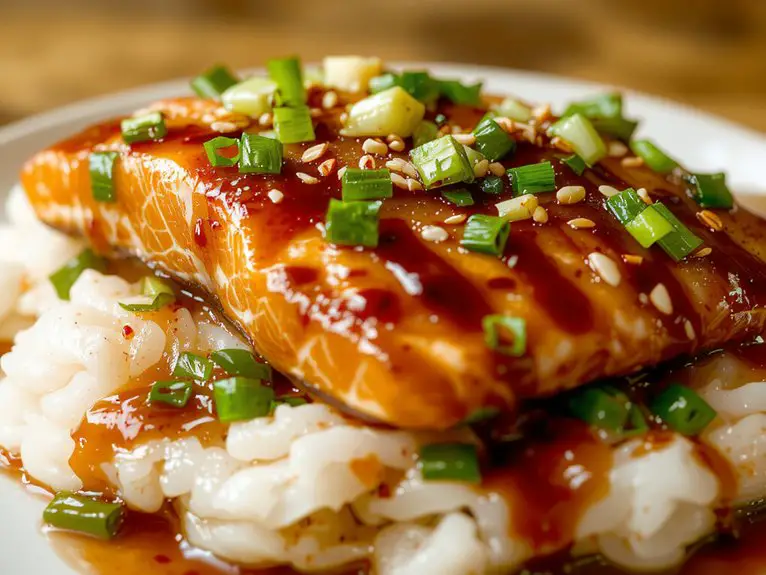
There’s something magical about teriyaki-glazed salmon—the way the sweet, savory sauce caramelizes into a glossy sheen while the fish stays buttery-soft inside.
This homemade version? It’s the one I make on repeat, whether it’s a busy weeknight or a dinner party where I want to impress without stress.
The secret? A simple, no-fuss marinade that doubles as a glaze, packed with garlic, ginger, and just the right balance of honey and soy.
Every bite is sticky, slightly charred at the edges, and melts like a dream. Trust me, once you try this method, you’ll never go back to takeout—it’s that good.
Ingredients
When it comes to teriyaki salmon, the key is balancing sweet, savory, and umami flavors. Quality ingredients make all the difference here—opt for fresh salmon and a homemade teriyaki sauce for the best results. Here’s what you’ll need:
For the Salmon:
- Fresh salmon fillets (skin-on or off, depending on preference—skin-on adds crispiness).
- Oil (use sesame oil for a nutty aroma or olive oil as a neutral alternative).
For the Teriyaki Sauce:
- Soy sauce (low-sodium is best to control saltiness).
- Brown sugar (for sweetness and caramelization—white sugar works but brown adds depth).
- Rice vinegar (or apple cider vinegar for a slight tang).
- Fresh garlic (minced—garlic powder is a sub, but fresh is unbeatable).
- Fresh ginger (grated—ground ginger works in a pinch but lacks brightness).
- Cornstarch (essential for thickening the sauce).
For Garnish:
- Sesame seeds (toasted for extra flavor).
- Chopped green onions (for freshness and color).
Pro Tips:
- Use fresh salmon for the best texture and flavor—frozen works but thaw completely and pat dry.
- Brown sugar caramelizes beautifully, creating a glossy sauce—don’t skip it!
- Toasted sesame seeds elevate the dish visually and add a nutty crunch.
Double the sauce recipe—leftovers are perfect for rice bowls or grilled veggies.
How to Make the Best The Best Teriyaki Salmon
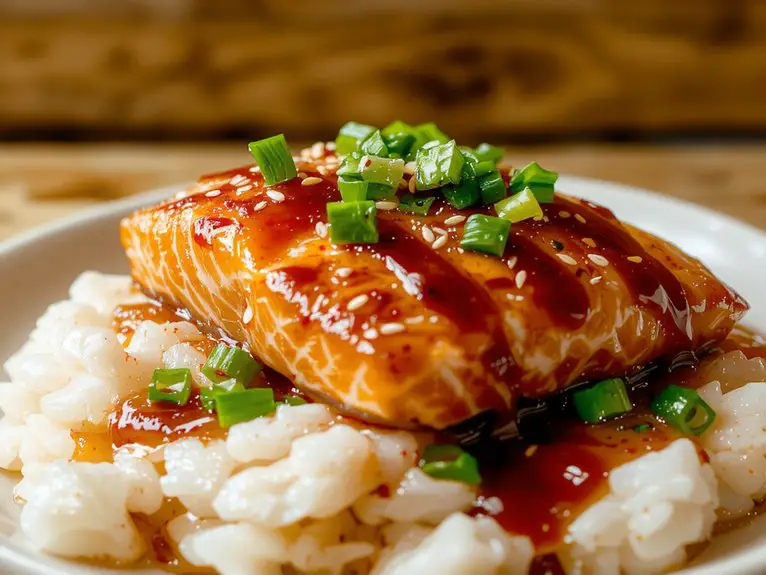
– Rest before serving: Let salmon sit for 2 minutes—this keeps it juicy.
Garnish with sesame seeds and sliced green onions.
*Pro Tip:* Reduce extra marinade on the stovetop for a drizzle.
Nutrition
This teriyaki salmon recipe is packed with nutrients and flavor. Below is the nutritional breakdown per serving.
| Nutrient | Amount per Serving |
|---|---|
| Calories | 350 kcal |
| Protein | 34 g |
| Fat | 18 g |
| Carbohydrates | 12 g |
| Fiber | 1 g |
| Sugar | 9 g |
| Sodium | 800 mg |
Chef Tips
To get the best results with this teriyaki salmon, I always pat the fillets dry before cooking—it helps the glaze stick better and guarantees a crispier sear.
Don’t overcrowd the pan; cook in batches if needed.
Let the salmon rest a few minutes after glazing so the flavors meld.
Use fresh garlic and ginger for the sauce—it makes a huge difference.
Trust me, these small steps elevate the dish.
Frequently Asked Questions
Can I Use Frozen Salmon for This Recipe?
Yes, I can use frozen salmon for this recipe. I just need to thaw it completely in the fridge overnight first. If it’s not fully thawed, it won’t cook evenly or absorb the flavors as well.
How Long Does Homemade Teriyaki Sauce Last?
I’d say homemade teriyaki sauce lasts about 1-2 weeks in the fridge if stored in an airtight container. Make sure it’s cooled before refrigerating, and I’d always check for off smells or mold before using it.
Can I Substitute Honey for Sugar in the Sauce?
Yes, I can substitute honey for sugar in the sauce. I’ll use it as a 1:1 replacement, but I’ll reduce any other liquids slightly to balance the consistency, since honey’s sweeter and thicker than sugar.
Is This Recipe Suitable for Grilling?
Yes, this recipe’s perfect for grilling. I’d marinate the salmon first, then cook it on medium-high heat to avoid burning the sauce. Just make sure to brush it with extra teriyaki while it’s cooking.
What Sides Pair Well With Teriyaki Salmon?
I’d pair steamed rice and stir-fried veggies with teriyaki salmon—they complement the savory-sweet flavors perfectly. A crisp Asian slaw or roasted asparagus works too, adding freshness or a charred element to balance the dish.


