The Best Homemade Dutch Baby Recipe
Recipe
This Dutch baby recipe is the secret weapon you didn’t know your breakfast game needed—crispy edges, custardy center, and all the drama of a showstopper pancake without the fuss.
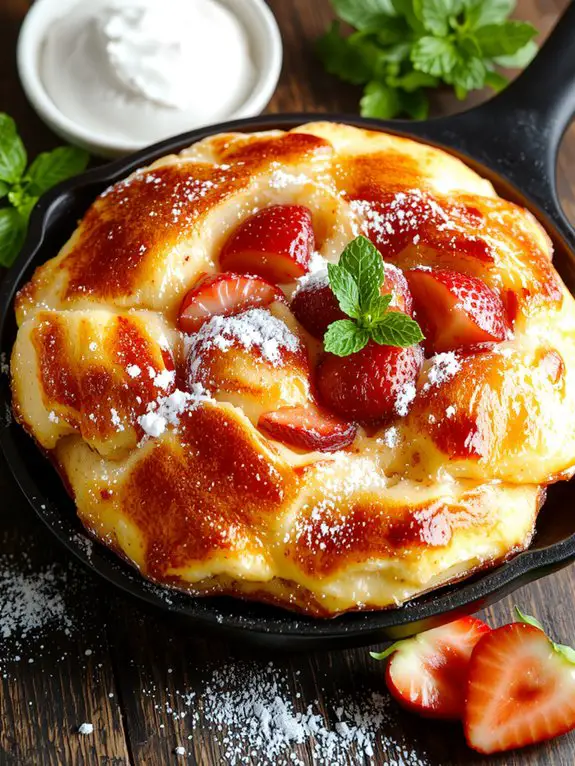
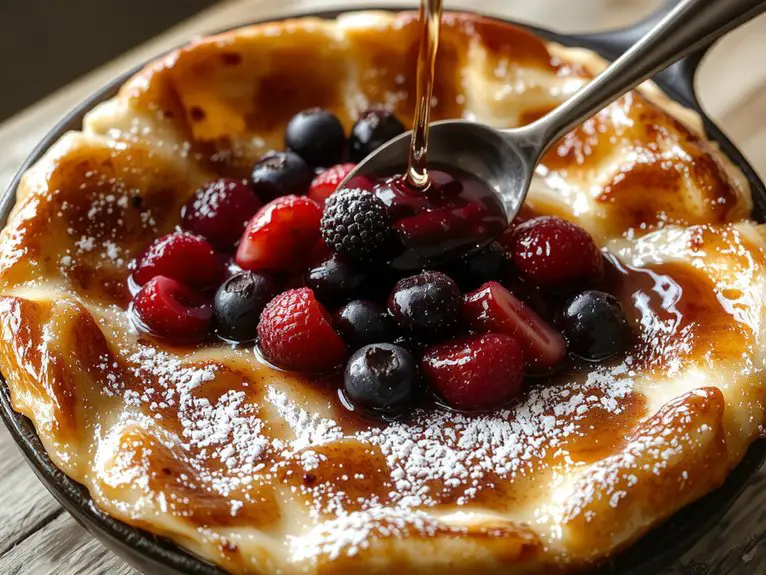
Made with just five pantry staples, it’s the kind of magic that puffs up golden and buttery in the oven, begging to be topped with a snowfall of powdered sugar or a cascade of fresh berries.
I’ve lost count of how many times I’ve made this (weekends, brunch emergencies, even “just because” Tuesday mornings), and every time, it delivers that perfect balance of crisp and tender, rich and airy.
Trust me, once you taste that first bite—warm, slightly sweet, with a hint of vanilla—you’ll wonder why you ever settled for ordinary pancakes.
Let’s make your skillet the star of the table.
Ingredients
The beauty of a Dutch Baby lies in its simplicity, but the right ingredients make all the difference. Stick to the basics, but don’t skimp on quality—your oven’s heat and these key components will transform a humble batter into a puffy, golden masterpiece.
- Eggs (3 large): Room temperature eggs are non-negotiable—they whip up better, giving the Dutch Baby its signature rise and airy texture.
- Whole Milk (¾ cup): The fat in whole milk guarantees richness and helps achieve that custardy interior. If you’re out, 2% milk works, but don’t use skim.
- All-Purpose Flour (¾ cup): Measure this precisely—too much flour yields a dense pancake, not a light, crisp Dutch Baby.
- Granulated Sugar (2 tablespoons): Adds just enough sweetness without overpowering. Skip it if you’re going the savory route.
- Vanilla Extract (1 teaspoon): A dash of vanilla enhances the flavor, but it’s optional if you’re serving with savory toppings.
- Salt (¼ teaspoon): Balances the sweetness and enhances all the flavors.
- Unsalted Butter (4 tablespoons): This is vital for creating that golden, buttery crust. Don’t substitute with oil—it won’t crisp up the same way.
- Optional Add-Ins: A pinch of cinnamon or nutmeg can elevate the flavor. For a savory twist, add a handful of grated cheese or herbs like thyme or chives.
Pro Tip: Use a preheated cast-iron skillet if you have one—it distributes heat evenly and helps achieve that perfect rise and crisp edges.
How to Make the Best Authentic Dutch Baby Instructions
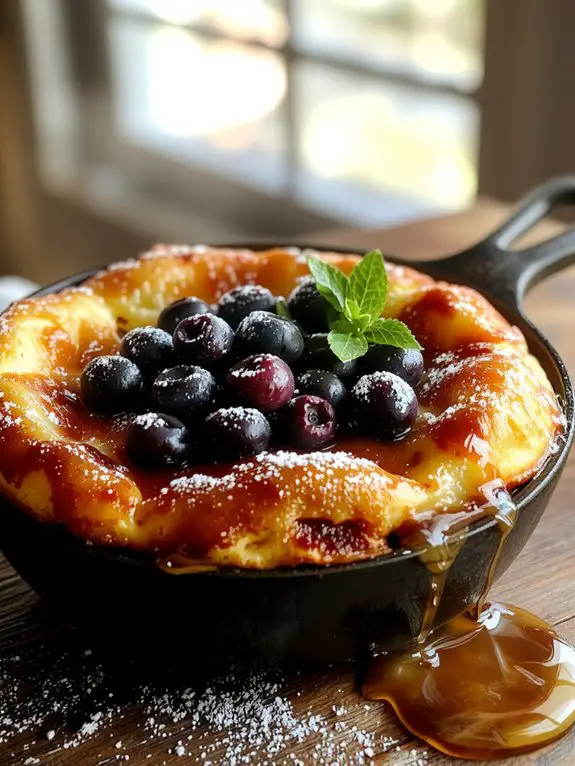
- Preheat your oven to 425°F (220°C) and place a 10-inch cast-iron skillet or oven-safe pan inside to heat. Preheating the pan guarantees a crispy, golden edge on your Dutch baby.
- In a blender, combine 3 large eggs, ½ cup all-purpose flour, ½ cup whole milk, 1 tablespoon granulated sugar, 1 teaspoon vanilla extract, and a pinch of salt. Blend on high for 30–45 seconds until the batter is smooth and frothy. Using a blender secures a lump-free batter and incorporates air for a light texture.
- Carefully remove the hot skillet from the oven using oven mitts and add 2 tablespoons of unsalted butter, swirling it around to coat the bottom and sides. The butter should sizzle slightly but not brown—this prevents burning and guarantees even flavor.
- Pour the batter into the hot skillet immediately after adding the butter. The batter will start cooking on contact, creating that signature puffy rise.
- Bake for 18–20 minutes, or until the Dutch baby is puffed, golden brown, and set in the center. Avoid opening the oven door during baking, as the temperature drop can cause the pancake to deflate.
- Remove the Dutch baby from the oven and let it cool slightly. It will deflate as it cools, which is normal.
- This is the perfect time to add toppings like powdered sugar, fresh fruit, or syrup.
- Serve warm and enjoy immediately for the best texture and flavor. Dutch babies are at their peak when fresh out of the oven!
Nutrition
A Dutch Baby is a delightful, fluffy pancake that’s perfect for breakfast or brunch. Here’s the nutritional breakdown per serving:
| Nutrient | Amount |
|---|---|
| Calories | 230 |
| Fat | 12g |
| Saturated Fat | 6g |
| Cholesterol | 140mg |
| Sodium | 150mg |
| Carbohydrates | 22g |
| Fiber | 1g |
| Sugar | 5g |
| Protein | 8g |
Chef Tips
When making a Dutch Baby, I always recommend preheating the oven with the skillet inside—this guarantees it’s piping hot for the batter to puff up perfectly.
Use room temperature ingredients to promote even mixing and rise.
Don’t overmix the batter; a few lumps are fine.
Serve immediately after baking to enjoy its light, airy texture.
Add toppings like fresh fruit, powdered sugar, or syrup for extra flavor.
Frequently Asked Questions
Can I Freeze a Dutch Baby for Later?
Yes, I can freeze a Dutch baby for later. Once it’s cooled completely, I wrap it tightly in plastic wrap or foil, then place it in a freezer-safe bag. To reheat, I warm it in the oven.
What’s the Difference Between a Dutch Baby and a Pancake?
A Dutch baby’s baked in the oven, puffing up with crispy edges, while pancakes are cooked on a griddle and stay flat. I find Dutch babies more custardy inside, and they’re served as one large dish.
Can I Use a Non-Stick Pan Instead of Cast Iron?
Yes, I can use a non-stick pan instead of cast iron for making a Dutch baby. It’ll still puff up nicely if I preheat it properly, though it might not get as crispy as with cast iron.
Why Did My Dutch Baby Deflate After Baking?
Your Dutch baby likely deflated because it cooled too quickly or wasn’t baked long enough. I’ve found that letting it rest in the oven with the door slightly open helps it stay puffed longer. Keep experimenting—you’ll nail it!
Can I Make a Dutch Baby Without a Blender?
Yes, I can make a dutch baby without a blender. I’ll just whisk the eggs, milk, and flour vigorously by hand until smooth. It takes a bit more effort, but it’ll still puff up beautifully in the oven.