The Best Homemade Eggs Benedict Recipe

Recipe
There’s something undeniably magical about a perfectly executed Eggs Benedict—the kind that makes brunch feel like a special occasion, even if it’s just a lazy Sunday morning at home.
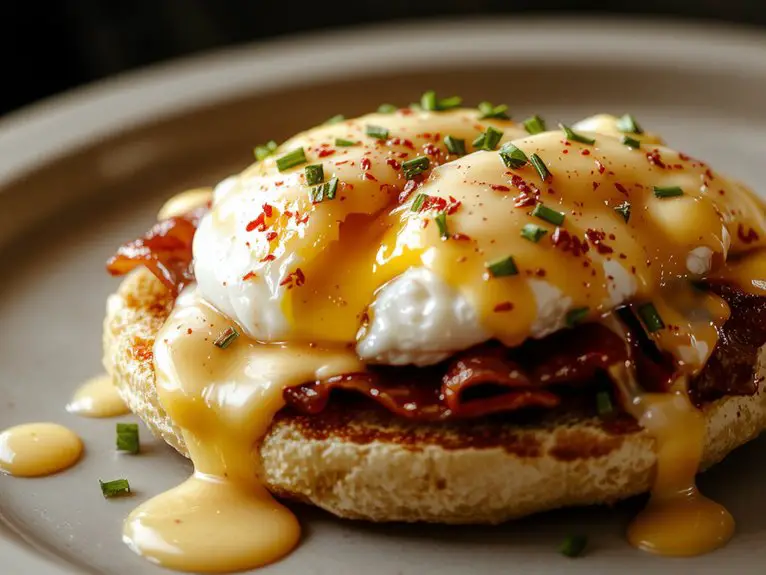
Imagine golden, runny yolks spilling over tender Canadian bacon, all nestled on a toasted English muffin and smothered in velvety hollandaise sauce that’s rich, tangy, and just decadent enough. Sounds intimidating? Don’t worry—this recipe breaks it down into foolproof steps, so you can whip up a restaurant-worthy plate without the stress.
The secret? A blender hollandaise that comes together in seconds and poached eggs so silky, they’ll make you swear off diner versions forever. Trust me, once you master this, you’ll be the brunch hero everyone begs for an encore.
Ingredients
To nail the perfect Eggs Benedict, quality ingredients are key. This dish is all about balance—the richness of the hollandaise, the smokiness of the meat, and the freshness of the eggs. Here’s what you’ll need to create a restaurant-worthy version at home:
- Eggs (fresh, large): The star of the show. Fresh eggs guarantee creamy yolks and firm whites. Don’t skimp here—this is non-negotiable.
- English muffins (split): Toasted to golden perfection, they provide the ideal base. Brioche or sourdough can work as substitutes for a richer or tangier twist.
- Canadian bacon or ham (thinly sliced): Adds smoky depth. For a vegetarian option, try avocado or sautéed spinach.
- Unsalted butter (melted): Essential for the hollandaise sauce. It’s rich and velvety—no substitutes here.
- Lemon juice (freshly squeezed): Brightens the hollandaise. Bottled won’t give you the same zing.
- White vinegar or apple cider vinegar: Helps the egg whites set when poaching. Either works, but white vinegar is traditional.
- Cayenne pepper or paprika: A pinch adds a subtle kick to the hollandaise. Optional, but highly recommended.
- Fresh chives or parsley (chopped): For garnish. Adds a pop of color and freshness.
Little Wins: A sprinkle of flaky sea salt on top of the finished dish elevates the flavors and adds a gourmet touch.
How to Make the Best Best Eggs Benedict Recipe
- Poach the Eggs: Bring a pot of water to a gentle simmer (not boiling) and add a splash of vinegar. Crack each egg into a small bowl, then slide it into the water. Cook for 3-4 minutes until the whites are set but yolks are still runny. Use a slotted spoon to transfer to a paper towel-lined plate.
- *Pro Tip:* Swirl the water before adding eggs to help them hold shape.
- *Watch Out:* Avoid overcrowding the pot—poach in batches if needed.
- Toast the English Muffins: Split and lightly toast the muffins until golden. Keep them warm in the oven (lowest setting) while you prep the rest.
- *Why It Matters:* Warm muffins absorb hollandaise better without getting soggy.
- Cook the Canadian Bacon: Heat a skillet over medium and lightly fry the bacon until just warmed through (about 1 minute per side).
- *Flexibility:* Swap for ham or smoked salmon if preferred.
- Make the Hollandaise: Whisk egg yolks, lemon juice, and a pinch of cayenne in a heatproof bowl. Place over a pot of barely simmering water (double boiler method). Slowly drizzle in melted butter while whisking constantly until thickened.
- *Pro Tip:* If the sauce breaks, add a splash of hot water and whisk vigorously.
- *Watch Out:* Keep the heat low—too hot and the eggs will scramble.
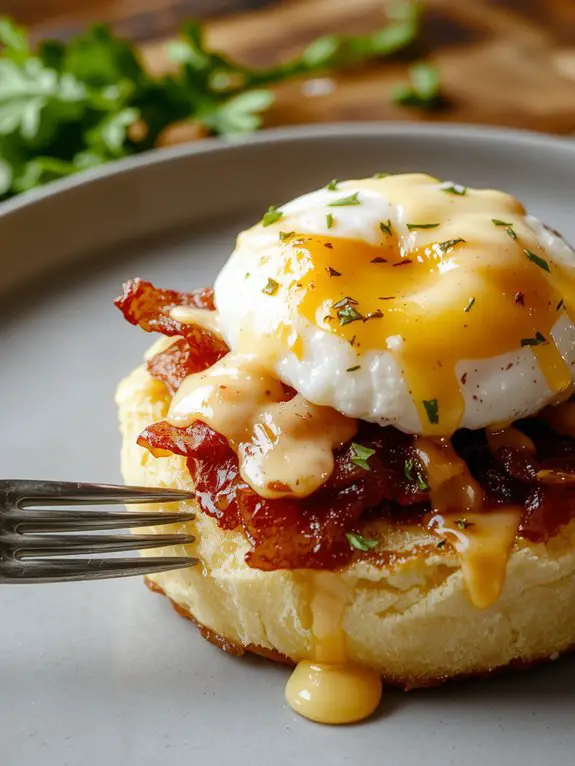
- Assemble: Layer each muffin half with bacon, a poached egg, and a generous spoonful of hollandaise. Garnish with chopped chives or paprika.
- *Visual Cue:* The yolk should ooze slightly when cut into.
- Serve Immediately: Eggs Benedict is best enjoyed fresh—hollandaise thickens as it cools.
- *Time-Saving Trick:* Prep hollandaise last to keep it warm and silky.
Nutrition
Eggs Benedict is a classic breakfast dish that provides a balanced mix of nutrients. Below is a breakdown of the nutritional content per serving.
Calories: 320
Protein: 14g
Carbohydrates: 25g
Fat: 18g
Saturated Fat: 8g
Cholesterol: 220mg
Sodium: 450mg
Fiber: 1g
Sugar: 2g
Chef Tips
Nailing the perfect Eggs Benedict takes practice, but I’ve picked up a few tricks that make it easier.
Use fresh eggs for poaching—they hold together better.
Warm your Hollandaise gently over a double boiler to avoid curdling.
Toast the English muffins until they’re crisp to stand up to the sauce.
And finally, assemble quickly so everything stays warm.
It’s all in the timing and attention to detail!
Frequently Asked Questions
Can I Make Eggs Benedict Ahead of Time?
You can prep parts ahead, but I wouldn’t assemble fully. Poach eggs and store them in ice water—reheat in warm water later. Make hollandaise ahead and gently rewarm. Toast muffins last-minute for best texture.
What’s the Best Substitute for Canadian Bacon?
I’d say the best substitute for Canadian bacon is regular ham—it’s similar in flavor and texture. If I want something leaner, I’d use turkey bacon, or I’d even try smoked salmon for a richer twist.
How Do I Fix Broken Hollandaise Sauce?
I fix broken hollandaise by whisking in a teaspoon of hot water or lemon juice gradually until it emulsifies again. If that doesn’t work, I start fresh with a new yolk and slowly add the broken sauce.
Can I Use a Different Type of Muffin?
Yes, you can use a different type of muffin. I’ve tried whole wheat, sourdough, or even croissants—they all work. Just make sure it’s sturdy enough to hold the toppings without getting soggy too fast.
Is Eggs Benedict Safe for Pregnant Women?
I’d check with your doctor first since eggs Benedict often uses runny yolks, which can carry salmonella. If you’re pregnant, you might want fully cooked eggs and pasteurized hollandaise to stay safe.