The Best Homemade Collard Greens Recipe
Recipe
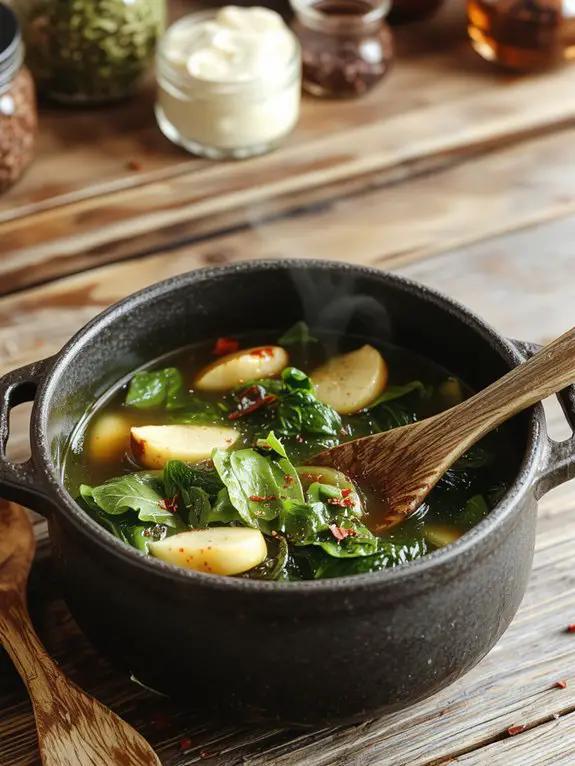
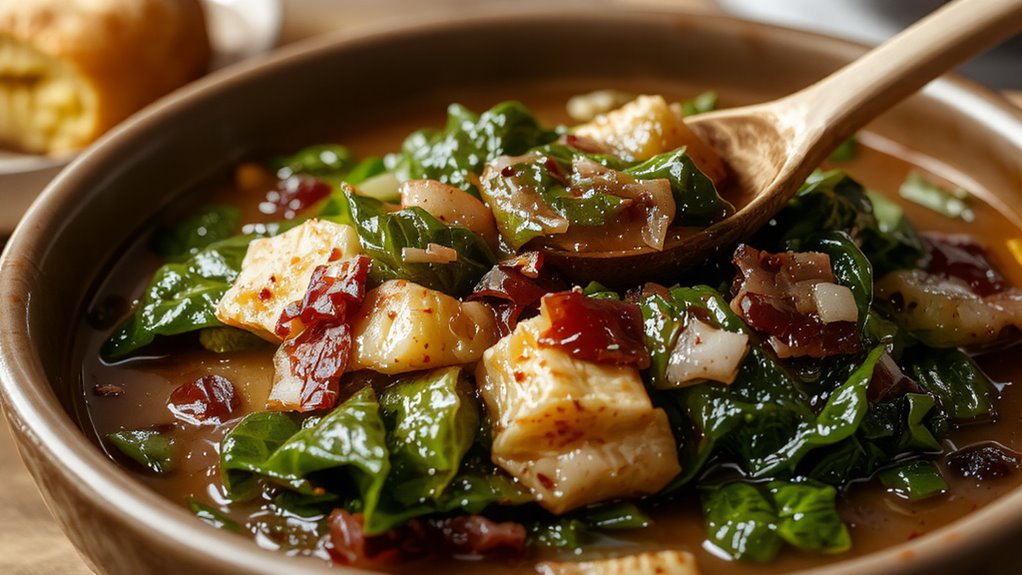
This collard greens recipe is hands-down the best you’ll ever make—bold, flavorful, and packed with Southern charm.
What sets it apart? A secret blend of smoked turkey for depth, a splash of apple cider vinegar for tang, and a slow simmer that transforms tough greens into silky, melt-in-your-mouth perfection.
I’ve been making this for years, and it’s always the first dish to disappear at family gatherings.
The aroma alone—earthy greens mingling with garlic and smoky goodness—will have everyone flocking to your kitchen.
Trust me, once you try this method, you’ll never look at collard greens the same way.
Let’s get started and make something unforgettable!
Ingredients
The key to perfect collard greens lies in balancing rich, smoky flavors with tender texture—every ingredient plays a role. Here’s what you’ll need, plus chef-approved swaps and insider tricks:
- Collard greens (2 large bunches): Fresh, dark leaves with no yellowing are non-negotiable for that earthy depth. Stems stay—they add texture when cooked low and slow.
- Smoked meat (1 ham hock or 4 slices bacon): The soul of the dish! Bacon works, but a ham hock delivers next-level smokiness. Vegetarian? Use smoked paprika (1 tsp) + 1 tbsp liquid smoke.
- Chicken broth (4 cups): Homemade or low-sodium store-bought. Water works, but broth builds layers of flavor.
- Onion (1, diced): Yellow for sweetness, but white or red onions add a sharper kick.
- Garlic (3 cloves, minced): Fresh only—powder won’t cut it here.
- Apple cider vinegar (2 tbsp): Brightens the greens and tenderizes them. White vinegar works in a pinch.
- Red pepper flakes (½ tsp): Just enough heat to wake up the dish. Skip if sensitive, but it’s a game-changer.
- Salt & black pepper: Season in layers—taste after 30 minutes of simmering and adjust.
- Sugar (1 tsp, optional): Balances bitterness; omit if using sweet onions.
Pro Tip: Save the leftover broth (potlikker)—it’s liquid gold for dipping cornbread or reheating leftovers!
How to Make the Best Classic Southern Collard Greens
- Wash and prep the greens: Thoroughly rinse collard greens under cold water to remove any dirt or grit. Remove the tough stems by folding each leaf in half lengthwise and slicing along the stem. Stack the leaves, roll them tightly, and chop into bite-sized pieces. Set aside. This guarantees clean, tender greens without any bitter stems.
- Cook the bacon: In a large pot or Dutch oven, cook chopped bacon over medium heat until crispy. Remove the bacon with a slotted spoon, leaving the rendered fat in the pot. This creates a flavorful base for cooking the greens.
- Sauté the aromatics: Add diced onion to the bacon fat and cook until soft and translucent, about 5 minutes. Stir in minced garlic and cook for an additional 30 seconds until fragrant. These ingredients build depth of flavor.
- Simmer the greens: Add the chopped collard greens to the pot in batches, stirring until they wilt slightly. Pour in chicken broth or water, along with apple cider vinegar, a pinch of sugar, red pepper flakes, and smoked ham hock or turkey wing. Bring to a boil, then reduce heat to low.
Cover and simmer for 1.5 to 2 hours, stirring occasionally. The long, slow cook breaks down the toughness of the greens and infuses them with smoky richness.
- Adjust seasoning: After cooking, remove the ham hock or turkey wing and shred any meat, returning it to the pot. Taste the greens and season with salt and black pepper as needed. If you prefer a tangier flavor, add a splash of apple cider vinegar.
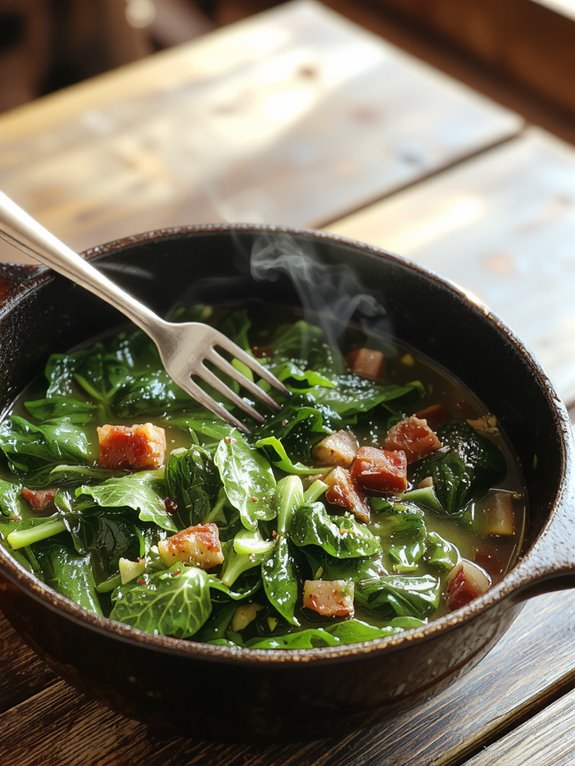
- Serve: Ladle the greens into bowls with their cooking liquid (potlikker) and garnish with the reserved crispy bacon. Serve with cornbread or hot sauce on the side. The potlikker is packed with nutrients and flavor—don’t skip it!
Pro Tip: If you’re short on time, use pre-washed, bagged collard greens and swap the ham hock for smoked turkey necks or smoked paprika for a quicker version.
Watch-Out Warning: Avoid overcooking the greens beyond 3 hours, as they can become mushy. Taste periodically to confirm they’re tender but still vibrant.
Nutrition
Collard greens are a nutritious leafy green vegetable, rich in vitamins and minerals. Here is the nutritional breakdown for a serving of homemade collard greens.
| Calories | Protein | Fat | Carbohydrates | Fiber | Sugar | Sodium | Calcium |
|---|---|---|---|---|---|---|---|
| 49 | 4g | 2g | 6g | 4g | 1g | 190mg | 266mg |
Chef Tips
While collard greens pack a nutritional punch, how you prepare them can make all the difference. I always pair them with smoky flavors like bacon or smoked paprika—it balances their bitterness.
For tender greens, try slow-cooking or braising; it softens them without losing texture. Don’t skip massaging the leaves with salt before cooking—it cuts bitterness.
These cooking techniques elevate their natural depth while keeping them vibrant.
Frequently Asked Questions
How Long Do Collard Greens Stay Fresh in the Fridge?
I’d say collard greens stay fresh in the fridge for about 5-7 days. For best storage tips, keep them unwashed in a plastic bag with a paper towel to absorb moisture and maintain freshness duration.
Can I Freeze Cooked Collard Greens?
Yes, I can freeze cooked collard greens to extend their shelf life. For storage tips, I’ll place them in airtight containers or freezer bags. When ready to eat, I’ll follow thawing instructions by reheating them directly or defrosting overnight.
What’s the Best Substitute for Smoked Meat?
I’d use smoked turkey as the best substitute for smoked meat; it adds a rich, smoky flavor without overwhelming the dish. For a vegetarian option, I’d try liquid smoke to get that deep, savory taste.
How Do I Reduce Bitterness in Collard Greens?
I reduce bitterness in collard greens by blanching or sautéing them first, breaking down bitter compounds. Adding flavor enhancers like onions, garlic, or a pinch of sugar balances the flavor. Slow-cooking leafy greens also mellows their bitterness.
Can I Use Canned Collard Greens Instead of Fresh?
Yes, I can use canned collard greens instead of fresh for convenience. Canned options are pre-cooked and ready to use, saving me time. I store them in a cool, dry place and refrigerate leftovers after opening.


