The Best Homemade Crepe Recipe

Recipe
I can confidently say that once you master this crepe recipe, you’ll wonder how you ever settled for anything less. These crepes are impossibly thin, delicate, and buttery, with just the right amount of crisp edges to contrast their tender centers.
What makes them truly special? The simplicity of the ingredients—flour, eggs, milk, and a hint of vanilla—paired with a technique that’s foolproof, even for beginners. These crepes are endlessly versatile, whether you’re craving them sweet with fresh berries and a drizzle of honey or savory with a gooey cheese and ham filling.
Trust me, the aroma alone as they sizzle on the pan will have everyone in the kitchen asking for seconds. Let’s get started—you’re just a whisk away from crepe perfection!
Ingredients
Start your crepe journey with the right ingredients to achieve that perfect balance of thin, tender, and slightly crispy texture. Here’s what you’ll need, along with some chef-approved tips and swaps to make the process foolproof.
- All-purpose flour: The backbone of your batter. Lightly spoon and level it for accuracy—don’t pack it down.
- Eggs: Fresh eggs guarantee richness and structure. Room temperature works best for smooth blending.
- Milk: Whole milk is ideal for creamy crepes, but 2% or even a non-dairy option like almond milk works too.
- Water: A splash lightens the batter, making it easier to spread thinly in the pan.
- Unsalted butter: Melted butter adds flavor. Salted butter can be used—just skip added salt.
- Sugar (optional): A pinch for sweetness in dessert crepes. Skip it for savory versions.
- Salt: A touch enhances all the flavors.
Pro Tip: Let the batter rest for 30 minutes (or overnight) to allow the flour to fully hydrate, securing silky, lump-free crepes.
For a gluten-free option, swap in a 1:1 gluten-free flour blend. If you’re out of butter, a neutral oil like canola works in a pinch.
How to Make the Best Perfect French Crepe Recipe

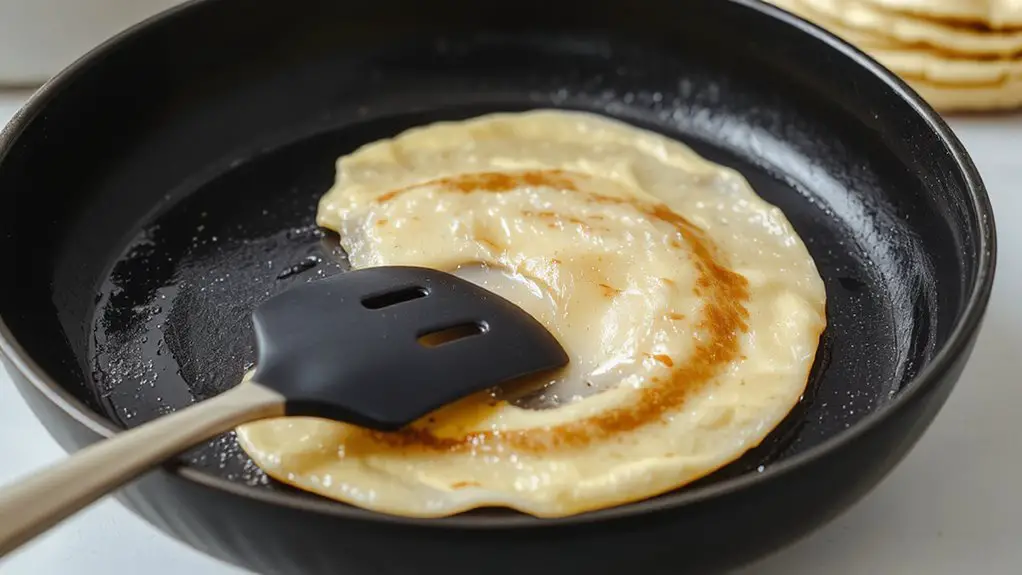
– Pour a small ladleful of batter into the pan, tilting and swirling to create a thin, even layer. Less batter makes thinner, more delicate crepes.
*Pro tip: Work quickly to spread the batter before it sets.*
– Cook for 1-2 minutes until the edges lift easily and the bottom is golden. Flip carefully using a spatula and cook the other side for another 30-60 seconds.
*Why it matters: Flipping too soon can cause tearing, so wait for those edges to loosen.*
– Stack the cooked crepes on a plate, covering them with a clean towel to keep them warm and pliable.
*Flexibility: Crepes can be made ahead and reheated in a skillet or microwave.*
Nutrition
Crepes are a versatile dish that can be enjoyed in many ways. Here’s the nutritional breakdown per serving.
| Nutrient | Amount per Serving |
|---|---|
| Calories | 90 kcal |
| Carbohydrates | 12 g |
| Protein | 3 g |
| Fat | 3 g |
| Fiber | 0.5 g |
| Sugar | 2 g |
Chef Tips
Mastering the art of making crepes doesn’t just rely on ingredients—it’s about technique. I always sharpen my knife skills to prep toppings precisely, ensuring uniformity for even cooking.
When seasoning the batter, I balance flavors carefully—a pinch of salt and a hint of sugar enhance without overpowering. Don’t rush; let the batter rest for smoother texture.
Practice flipping—it’s key to perfect thin, golden crepes.
Frequently Asked Questions
Can I Make Crepes Without a Crepe Pan?
I can make crepes without a crepe pan—I’ve used a nonstick skillet or frying pan as pan alternatives. Ensuring batter consistency is thin and smooth helps, and I spread it evenly across the heated surface.
How Do I Store Leftover Crepes?
I stack my leftover crepes with parchment paper between them, then store them in airtight containers to keep them fresh. If I’m not eating them soon, I’ll refrigerate them—just reheat gently before serving.
Can I Freeze Crepe Batter?
Yes, I can freeze crepe batter successfully. I’ll pour it into an airtight container, leaving space for expansion, and label it with the date. Freezing tips include thawing it overnight in the fridge before using for batter storage.
What’s the Best Substitute for Eggs in Crepes?
I’d use egg alternatives like mashed bananas, applesauce, or flaxseed mixed with water; they bind well. For vegan options, silken tofu or aquafaba works too—it’s easy to swap them in without changing the texture much.
Why Do My Crepes Tear When Flipping?
I find that if my crepes tear when flipping, it’s usually because the batter consistency is too thick or the pan isn’t hot enough. I use a thin batter and a quick flipping technique to prevent tearing.