The Best Homemade Pickle Recipe
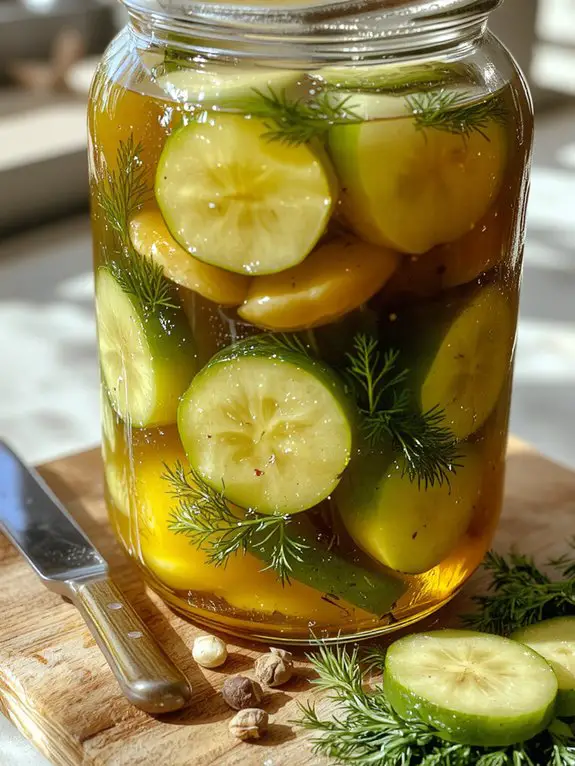
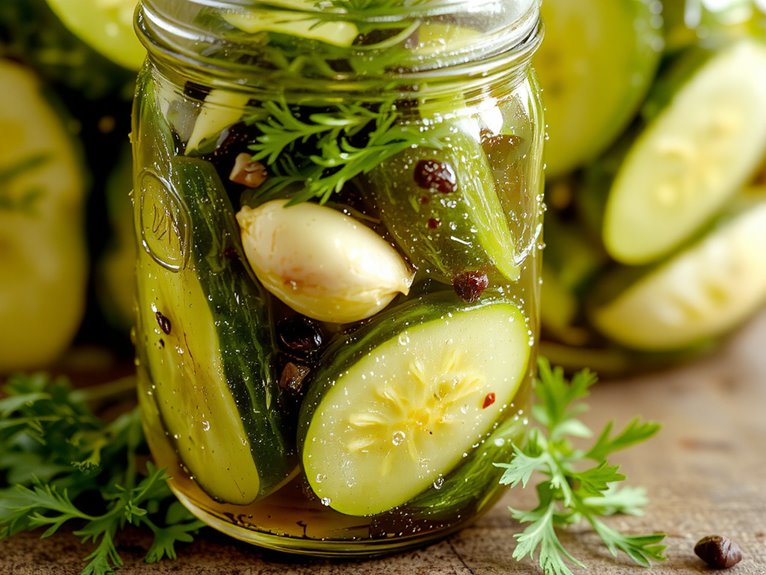
Recipe
There’s nothing quite like biting into a perfectly crunchy pickle—it’s crisp, tangy, and downright addictive.
This recipe isn’t just about throwing cucumbers in brine; it’s about crafting pickles so good, you’ll wonder why you ever bought them store-bought. The secret? A blend of fresh garlic, dill, and a touch of vinegar that creates a flavor punch you’ll crave.
Trust me, once you try these, you’ll be making jars for every occasion—they’re *that* good. Whether you’re a pickle pro or a total beginner, this recipe is your ticket to pickle perfection.
Let’s get brining!
Ingredients
Pickles are all about crispness, tang, and balance—using the right ingredients guarantees they hit every note perfectly. Start with fresh, firm cucumbers for the best crunch, and don’t skimp on the vinegar for that signature tang. Here’s what you’ll need:
- Cucumbers: Small, firm pickling cucumbers work best—avoid large, watery ones for ideal crunch.
- Vinegar: White distilled vinegar is classic, but apple cider vinegar adds a slightly fruity twist.
- Water: Always use filtered or distilled water to avoid any off flavors.
- Salt: Kosher or pickling salt is essential—table salt can cloud the brine.
- Garlic: Fresh garlic cloves add depth; smash them slightly to release flavor.
- Dill: Fresh dill fronds are ideal, but dried dill works in a pinch.
- Spices: Mustard seeds, peppercorns, and coriander seeds are non-negotiables for that classic pickle flavor.
- Sugar (optional): A touch balances the acidity—white sugar works, but honey or agave can sub in.
- Extras: Bay leaves, chili flakes, or even fresh horseradish can elevate your pickles to gourmet status.
Pro Tip: Always sterilize your jars to guarantee your pickles stay fresh and safe to eat. Freshness is key—pickling works best when cucumbers are at their peak.
How to Make the Best Classic Dill Pickle Recipe
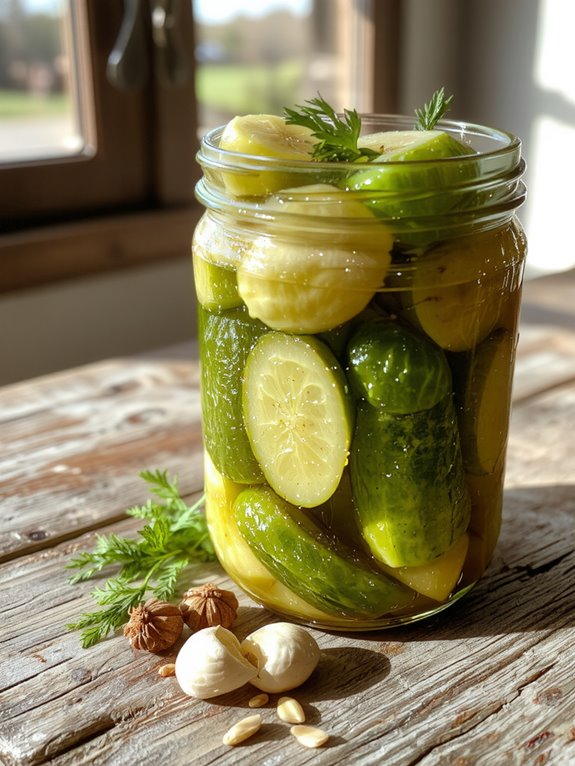
- Sterilize your jars by boiling them for 10 minutes to guarantee they’re clean and safe for storing your pickles. Clean jars prevent unwanted bacteria from spoiling your hard work.
- Prepare the cucumbers by washing them thoroughly and trimming off the blossom end, which contains enzymes that can soften pickles. Keep them whole or slice them, depending on your preference.
- Pack the cucumbers tightly into jars along with garlic cloves, dill sprigs, and any optional spices like mustard seeds or peppercorns. Tight packing secures even flavor distribution and prevents shifting during processing.
- Make the brine by combining water, vinegar, and pickling salt in a pot and bringing it to a boil. The brine’s acidity is key to preserving the cucumbers and giving them their tangy flavor.
- Pour the hot brine over the cucumbers in the jars, leaving about ½ inch of headspace. This space allows for expansion during processing and prevents spills.
- Remove air bubbles by gently tapping the jars or using a knife to release trapped air. Air bubbles can cause uneven pickling or spoilage.
- Seal the jars with lids and process them in a boiling water bath for 10 minutes if you plan to store them long-term. This step confirms a vacuum seal for safe storage.
- Let the jars cool completely before checking the seals. A properly sealed lid will be concave and won’t move when pressed. Store unsealed jars in the refrigerator and enjoy within a few weeks.
- Wait at least a week before opening to allow the flavors to fully develop. Patience assures a perfectly balanced pickle with the right crunch and tang.
Nutrition
Pickles are a low-calorie snack rich in vitamins and minerals. They also contain beneficial probiotics that support gut health.
Calories | 11
Fat | 0.2g
Sodium | 1208mg
Carbohydrates | 2.3g
Fiber | 1.2g
Sugar | 1.1g
Protein | 0.5g
Chef Tips
To make the best pickles, I always start with fresh cucumbers—they should be firm and free of blemishes. I slice them uniformly for even brining and use distilled vinegar for a clean flavor. Adding garlic, dill, and mustard seeds enhances taste.
Sterilize jars to prevent spoilage, and refrigerate pickles for at least 24 hours before tasting. Adjust salt and sugar to balance tanginess and sweetness. Enjoy crisp, flavorful results!
Frequently Asked Questions
Can I Reuse Pickle Juice?
Yes, I can reuse pickle juice! I’ll add fresh veggies like cucumbers or carrots, making sure they’re clean and trimmed. I might dilute it with vinegar or water if it’s too salty. It’s great for quick pickles!
How Long Do Homemade Pickles Last?
Homemade pickles last about 1-2 months in the fridge if stored properly in a sealed jar. I’d recommend checking for any off smells or changes in texture before eating ’em to verify they’re still safe.
Can I Make Pickles Without Vinegar?
Yes, I can make pickles without vinegar by using fermentation. I’ll soak cucumbers in a saltwater brine, letting natural bacteria create lactic acid for tanginess. It takes longer but gives a unique, probiotic-rich flavor to the pickles.
What Cucumbers Are Best for Pickling?
For pickling, I always use small, firm cucumbers like Kirby or Persian—they stay crisp. Avoid waxed cukes; their skin won’t absorb brine well. Pick ’em fresh, no soft spots, and you’ll get perfect crunchy pickles every time.
Do Pickles Need to Be Refrigerated?
You’ll need to refrigerate homemade pickles since they’re not heat-processed like store-bought ones. I keep mine chilled to stay crisp and safe—room temp risks spoilage. Store-bought? Check the label, but unopened jars often don’t need it.


