The Best Homemade Sourdough Bread Recipe With Starter
Recipe
If you’ve ever dreamed of baking sourdough bread that rivals your favorite artisan bakery, this recipe is your golden ticket. Trust me—once you nail this method, you’ll never look back.
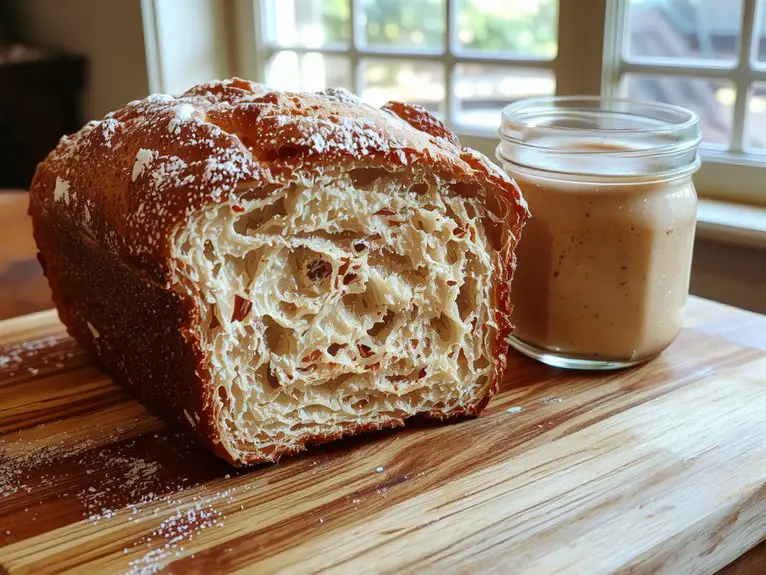
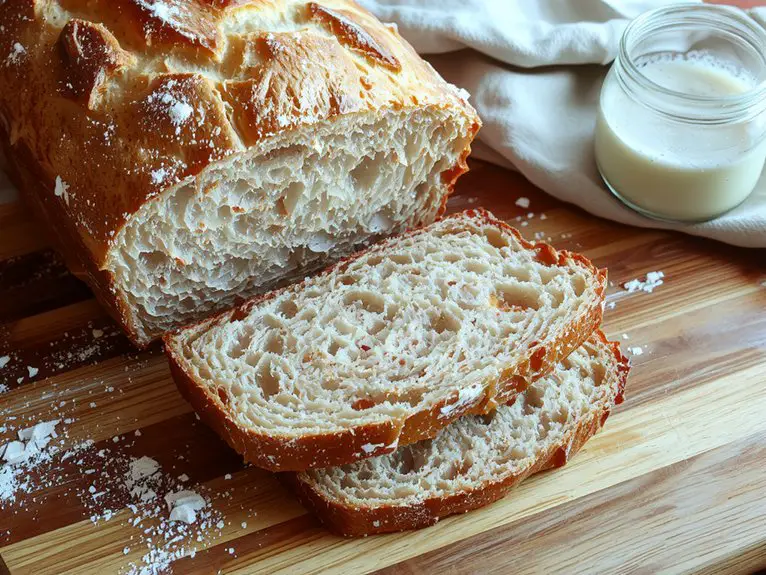
The secret? A vibrant, tangy sourdough starter that transforms simple flour, water, and salt into a loaf with an irresistible crust, chewy interior, and that unmistakable sourdough aroma that fills your kitchen like a warm hug. It’s not just bread—it’s an experience.
Plus, this recipe skips the intimidation factor and breaks it down into manageable steps, so even beginners can feel like sourdough pros. Imagine slicing into a warm loaf, hearing that satisfying crackle of the crust, and slathering it with butter as it melts into the airy, tangy crumb.
Ready to make magic? Let’s get baking.
Ingredients
Great sourdough starts with simple, high-quality ingredients—each one plays a vital role in developing that signature tangy flavor and chewy texture. Here’s what you’ll need, with a few insider tricks to nail your loaf every time.
- Active sourdough starter – The heart of your bread. It should be bubbly and doubled in size before use (feed it 4–12 hours beforehand). No starter? Try a 50/50 mix of whole wheat flour and water, fermented for 5 days.
- Bread flour – Higher protein content (12–14%) means better gluten structure and a chewy crumb. All-purpose flour works in a pinch but yields a softer loaf.
- Whole wheat or rye flour (optional) – Adds depth of flavor. Even 10% makes a difference—just don’t overdo it or the bread will be dense.
- Water – Filtered or bottled is best if your tap water is heavily chlorinated, which can inhibit fermentation.
- Fine sea salt – Non-negotiable for flavor and gluten control. Table salt’s additives can throw off the taste.
- Rice flour (for dusting) – The secret to a flawless crust that won’t stick to your banneton. Cornmeal works too, but rice flour is finer.
Pro Tip: Weigh your ingredients—especially the flour and water—for consistency. Volume measurements (cups) vary wildly.
Little Win: A spray bottle of water for misting the dough pre-bake gives you that blistered, artisanal crust.
How to Make the Best Artisan Sourdough Bread Recipe
6. Shape the dough – Gently turn the dough onto a floured surface.
Fold edges toward the center, then roll into a tight ball.
7. Final proof – Place seam-side up in a floured banneton or bowl.
Cover and refrigerate overnight (12-16 hours) for deeper flavor.
8. Preheat and score – Heat a Dutch oven at 475°F (245°C) for 30 minutes.
Turn dough onto parchment, slash the top with a razor for even expansion.
9. Bake covered – Transfer dough to the Dutch oven, cover, and bake 20 minutes.
Trapped steam creates a crisp crust.
10. Bake uncovered – Remove lid and bake another 20-25 minutes until deep golden brown.
Cool completely before slicing—this prevents a gummy crumb.
Pro Tips:
- Use a scale for accuracy—volume measurements vary.
- Cold dough is easier to score.
- For extra shine, brush with water before baking.
Watch Out:
- Overproofing leads to flat loaves. If dough jiggles like jelly, it’s ready.
- Skip the fridge proof for same-day bread, but flavor will be milder.
- Don’t skip the autolyse—it improves texture.
Nutrition
Sourdough bread is a nutritious option packed with essential nutrients. Here’s a breakdown of its nutritional content per slice (approx. 50g).
| Nutrient | Amount per Slice |
|---|---|
| Calories | 120 kcal |
| Carbohydrates | 24g |
| Protein | 4g |
| Fat | 0.5g |
| Fiber | 2g |
| Sodium | 200mg |
Chef Tips
When it comes to making sourdough bread successfully, I’ve found that maintaining consistency is key. Feed your starter regularly and keep it at room temperature before baking.
Use a Dutch oven for consistent heat and steam. Don’t rush the fermentation—let the dough rise fully.
Scoring the loaf deeply helps it expand evenly. Finally, trust your instincts; sourdough is forgiving and rewards patience and practice.
Frequently Asked Questions
How Do I Store My Sourdough Starter?
I keep my sourdough starter in a jar with a loose lid, stored in the fridge when I’m not baking. I feed it weekly, discarding half and adding equal parts flour and water to keep it active.
Can I Use Whole Wheat Flour for the Starter?
Yes, you can use whole wheat flour for the starter. I’ve found it adds a deeper flavor and boosts fermentation since it’s richer in nutrients. Just remember, it might make your starter thicker than using all-purpose flour.
Why Is My Sourdough Bread Too Dense?
Your sourdough’s too dense ’cause I didn’t proof it long enough or knead it properly. Maybe I didn’t feed my starter well, or I used too much flour. I’ll adjust and try again for a lighter loaf.
How Often Should I Feed My Starter?
I feed my starter daily if I’m baking often, but when I’m not, I’ll keep it in the fridge and feed it weekly. It’s key to watch for bubbles and a tangy smell to know it’s active.
Can I Make Sourdough Bread Without a Dutch Oven?
Absolutely, I can make sourdough bread without a Dutch oven. I’ve used a baking sheet, pizza stone, or even a cast iron skillet with a steam pan below for moisture. It’s all about trapping steam effectively.