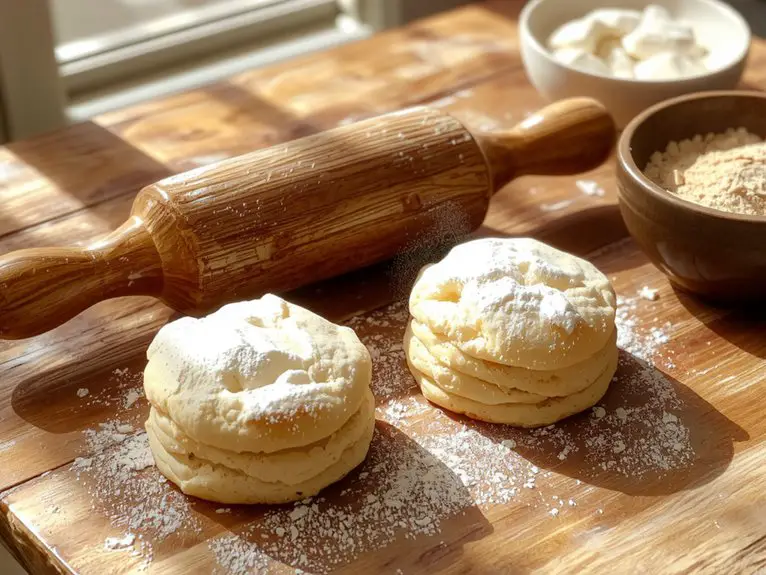
The Best Homemade Sourdough Recipe
Recipe
I can confidently say this sourdough recipe is a game-changer—once you taste the crusty exterior and tangy, airy crumb, there’s no going back. What makes it special? It’s all about the slow fermentation, which not only develops incredible depth of flavor but also makes the bread easier to digest.
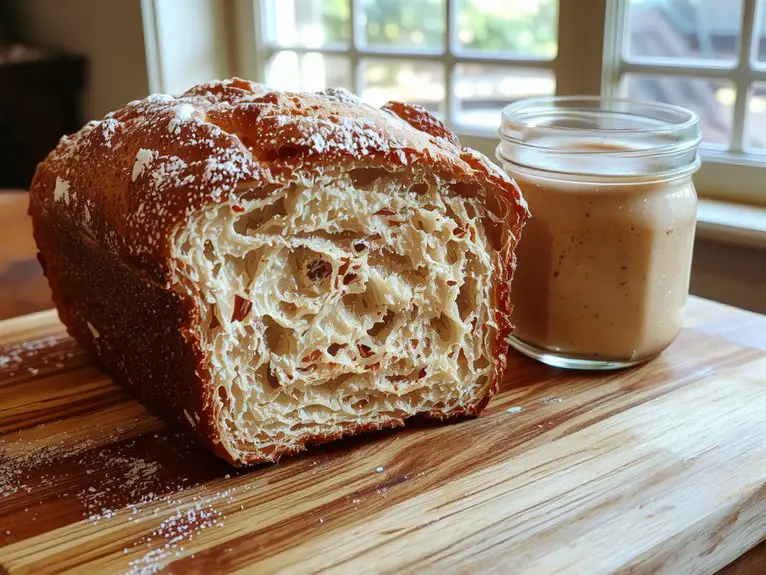
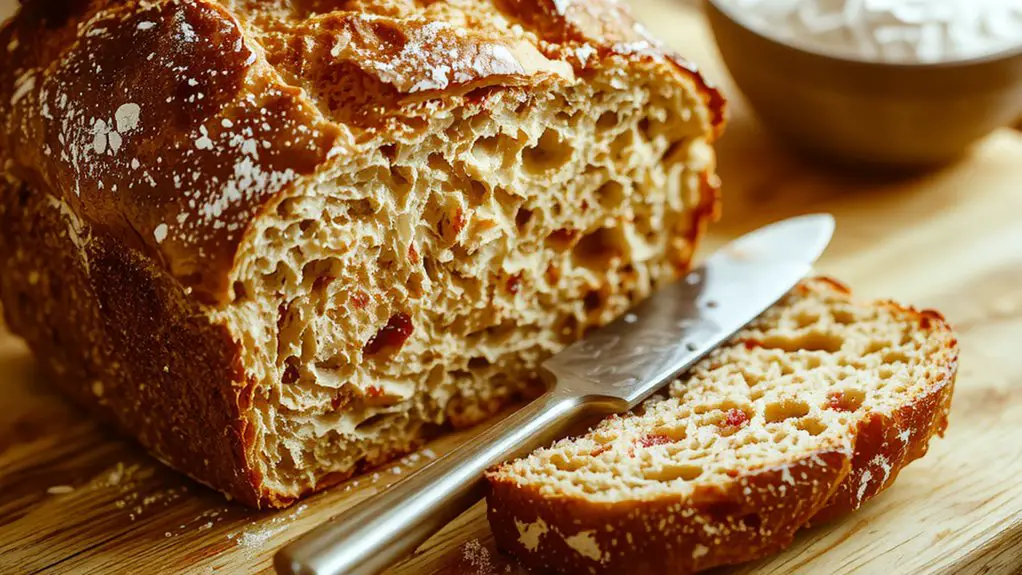
My family has been making sourdough for years, and this recipe is the one we always come back to. Imagine pulling a loaf from the oven, hearing that satisfying crackle as it cools, then slicing into it to reveal those perfect, irregular holes.
The process is therapeutic, and the results are worth every minute. Even if you’re new to sourdough, this recipe walks you through every step, so you’ll feel like a pro in no time. Trust me, your kitchen will smell like a bakery, and your taste buds will thank you.
Ingredients
Sourdough bread starts with just a handful of simple ingredients, but the quality and handling of each can make or break your loaf. Let’s break down the essentials and some insider tips to guarantee your sourdough turns out chewy, tangy, and bakery-worthy.
- Active Sourdough Starter: The heart of your loaf. Make sure it’s bubbly and active—feed it 4-6 hours before using for the best rise. No starter? Start one at least 5 days in advance, or check if a local bakery will share theirs.
- Bread Flour (or All-Purpose Flour): Bread flour’s higher protein content gives the dough strength and creates that signature chewy crumb. All-purpose works too, but the loaf may be slightly softer.
- Whole Wheat Flour: Adding a small amount (10-20%) boosts flavor and adds nutrients. Substitute with rye or spelt for a different twist.
- Water: Filtered or spring water is best. Chlorinated tap water can inhibit fermentation. Warm water (about 75-80°F) helps activate the yeast.
- Salt: Fine sea salt enhances flavor and strengthens the gluten structure. Don’t skip it—it’s key to balancing the tanginess.
- Optional Add-Ins: For extra flavor, consider tossing in sesame seeds, oats, or a tablespoon of honey.
Pro tip: Measure ingredients by weight (grams) for consistency—baking is a science, and precision matters.
And don’t rush the fermentation—time is your secret ingredient for developing that deep, complex flavor.
How to Make the Best Step-by-Step Instructions
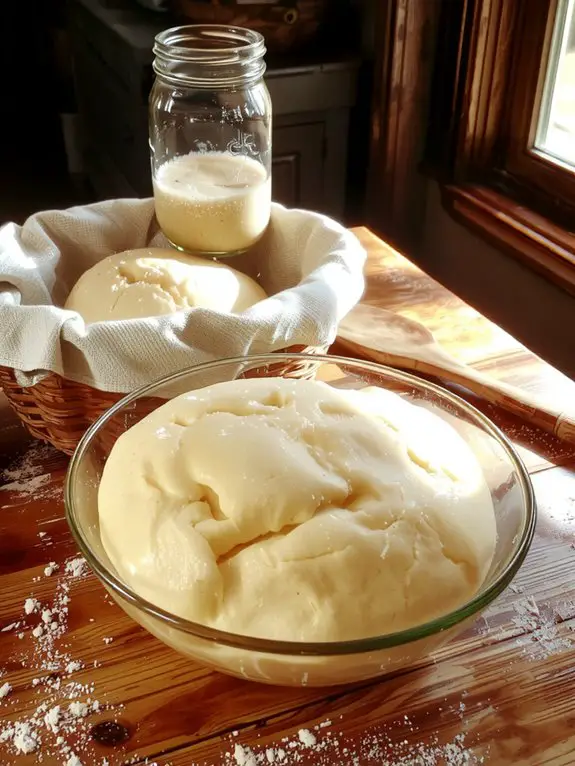
• Feed your sourdough starter.
Make sure your sourdough starter is active and bubbly before you begin. Feed it with equal parts flour and water 4-6 hours before starting the recipe. It should double in size and pass the float test (dropping a small piece of starter in water—it should float).
• Mix the dough.
Combine flour, water, and active sourdough starter in a large bowl. Mix until no dry flour remains.
Let it rest for 30 minutes (autolyse) to hydrate the flour and make kneading easier.
• Add salt and knead.
Sprinkle salt over the dough and gently knead it in by hand or with a stand mixer.
Knead until the dough becomes smooth and elastic, about 8-10 minutes by hand.
Pro tip: Use the windowpane test—stretch a small piece of dough; if it stretches thin without tearing, it’s ready.
• First proof (bulk fermentation).
Cover the dough and let it rise at room temperature for 4-6 hours, depending on your kitchen’s warmth.
Perform stretch-and-folds every 30 minutes during the first 2 hours to strengthen the dough.
Watch for it to double in size and feel airy.
• Shape the dough.
Turn the dough onto a lightly floured surface and shape it into a round or oval loaf.
Place it seam-side up in a floured banneton or lined bowl.
Pro tip: Dust the banneton generously with rice flour to prevent sticking.
• Second proof (cold fermentation).
Cover the dough and refrigerate overnight (8-12 hours). This slow rise develops flavor and makes the dough easier to handle when baking.
• Preheat and prepare.
Preheat your oven to 450°F (230°C) with a Dutch oven or baking stone inside.
Let the oven heat for at least 30 minutes to guarantee it’s fully hot.
• Score and bake.
Remove the dough from the fridge and carefully invert it onto parchment paper.
Score the top with a sharp blade to allow for oven spring.
Transfer to the preheated Dutch oven, cover with the lid, and bake for 20 minutes.
• Uncover and finish baking.
Remove the lid and bake for another 20-25 minutes until the crust is deep golden brown and the internal temperature reaches 200°F (93°C).
Pro tip: For extra crustiness, leave the oven door cracked open for the last 5 minutes.
• Cool completely.
Transfer the bread to a wire rack and let it cool for at least 1 hour before slicing. This allows the crumb to set and prevents it from becoming gummy.
• Store or enjoy.
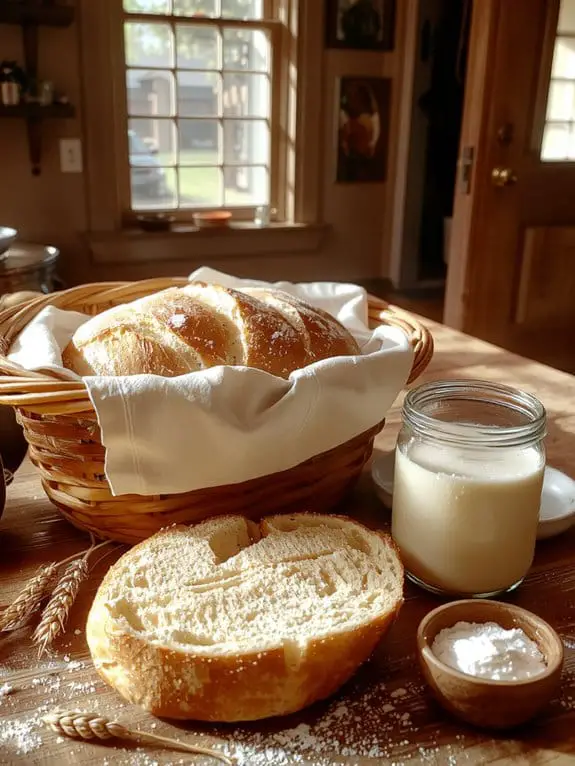
Store leftover bread in a paper bag or wrapped in a dish towel to maintain crustiness.
For longer storage, freeze slices and toast them as needed.
Nutrition
Sourdough bread is a nutritious and wholesome option, rich in essential nutrients. Here are the key nutritional details per serving.
| Nutrient | Amount per Serving |
|---|---|
| Calories | 185 kcal |
| Carbohydrates | 36 g |
| Protein | 6 g |
| Fat | 1 g |
| Fiber | 2 g |
| Sodium | 390 mg |
Chef Tips
Making sourdough can be rewarding, and I’ve found a few tricks that help along the way. Always use a digital scale for precise measurements, and keep your starter at room temp for active fermentation.
Fold the dough gently to develop strength without overworking it. Bake in a preheated Dutch oven for a crispy crust.
Patience is key—let it rise fully for the best texture.
Frequently Asked Questions
How Do I Store Leftover Sourdough Bread?
I keep my leftover sourdough in a bread box or paper bag to maintain its crust. If it’ll sit longer, I wrap it in a clean kitchen towel or plastic wrap and store it at room temp.
Can I Freeze Sourdough Dough for Later Use?
Yes, I can freeze sourdough dough for later use. I’ll shape it, wrap it tightly in plastic, then place it in a freezer bag. When I’m ready, I’ll thaw it overnight and let it proof.
What Causes My Sourdough to Turn Out Dense?
Your sourdough turns out dense if I don’t develop enough gluten, proof it too little or too much, or use too much flour when shaping. I’ve found balancing hydration and fermentation’s key for a lighter loaf.
How Long Does Sourdough Starter Last Without Feeding?
A sourdough starter lasts about 1-2 weeks without feeding at room temp, but I can refrigerate it for up to a month. If I leave it longer, it might revive with water and flour, though it’ll take time.
Can I Use Whole Wheat Flour Instead of White Flour?
Yes, I can use whole wheat flour instead of white flour, but I’ll need to adjust the hydration since it absorbs more water. It’ll give my sourdough a denser texture and nuttier flavor, which I might love.