The Best Homemade Pasta Dough Recipe
Recipe
There’s something undeniably magical about making pasta from scratch—it’s fresh, silky, and has a texture that store-bought versions just can’t match. This homemade pasta dough recipe is my go-to, and I can confidently say it’s foolproof and absolutely worth the effort.
With just a handful of simple ingredients—flour, eggs, and a pinch of salt—you’ll create dough that’s smooth, elastic, and ready to transform into any shape your heart desires. The key here is patience and love; kneading the dough until it’s perfectly supple feels almost meditative.
When you bite into this pasta, you’ll notice its delicate chew and rich, eggy flavor that makes every dish feel elevated. Whether you’re craving tagliatelle, ravioli, or pappardelle, this recipe will become your kitchen staple.
Trust me, once you taste homemade pasta, there’s no going back. Let’s roll up our sleeves and get started—you’re about to make something truly special.
Ingredients
Crafting homemade pasta dough is all about simplicity and quality. The right ingredients make all the difference, so let’s break it down. Stick to the essentials, and you’ll have a silky, pliable dough that’s worth every knead.
- Flour: Use “00” flour for its fine texture, which creates a tender dough. If unavailable, all-purpose flour works, but expect a slightly denser result. Semolina flour can also be mixed in for added chewiness.
- Eggs: Fresh, large eggs are non-negotiable—they bind the dough and add richness. Organic or free-range eggs will give your pasta a vibrant yellow hue.
- Salt: A pinch of fine sea salt elevates the flavor. Skip iodized salt—it can leave a bitter aftertaste.
- Olive oil (optional): A drizzle adds a subtle richness and makes the dough more pliable. Extra virgin olive oil is best for its flavor.
- Water (if needed): Use sparingly to adjust the dough’s consistency if it feels too dry.
Pro tip: Let your eggs come to room temperature before mixing—they’ll incorporate more evenly into the flour.
And remember, less is more when it comes to additions; the beauty of pasta dough lies in its simplicity.
How to Make the Best Authentic Italian Pasta Dough
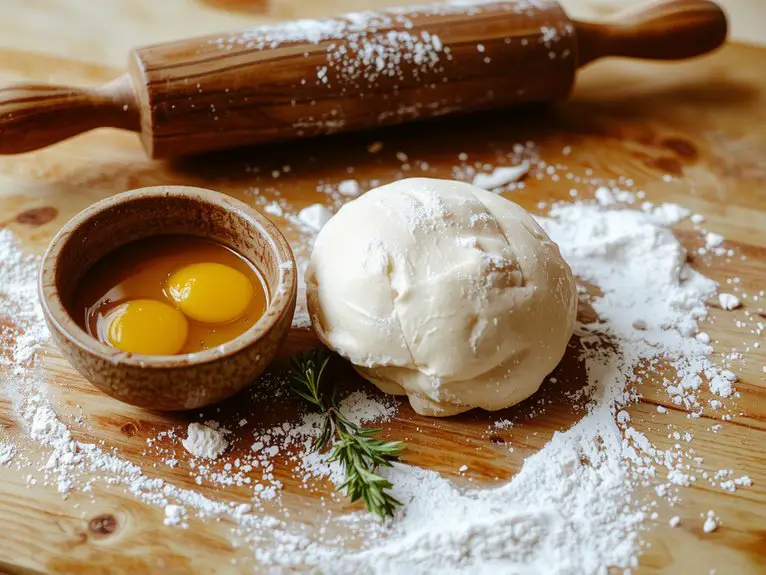
– Measure all ingredients accurately. Use a kitchen scale for flour to guarantee precision, as too much flour can make the dough dry and tough.
Pro Tip: Sift the flour beforehand to avoid lumps and aerate it for a smoother texture.
– Create a well with the flour on a clean work surface and crack the eggs into the center. This method helps incorporate the eggs gradually, preventing a messy start.
Watch-Out: Make sure the “walls” of the flour well are high enough to contain the eggs.
– Beat the eggs lightly with a fork, then gradually draw in the flour from the edges. Mix slowly to avoid breaking the flour wall.
Why It Matters: This traditional technique secures even hydration of the flour.
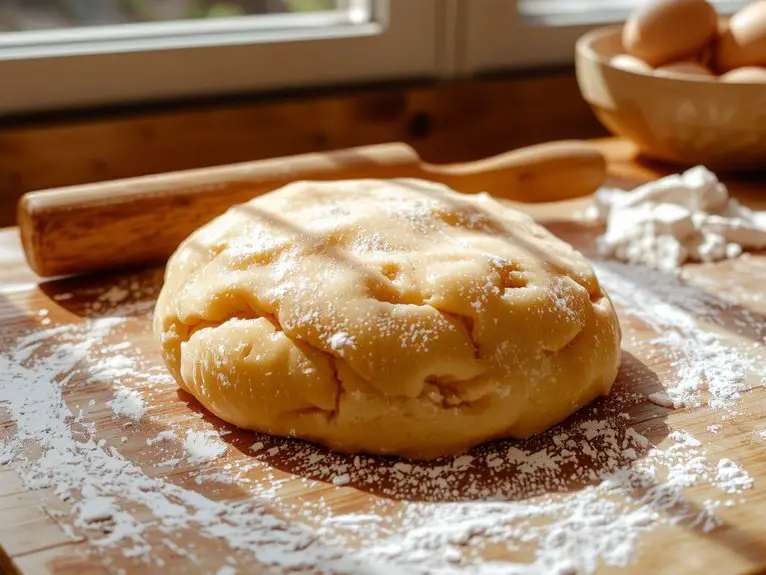
– Knead the dough for about 8-10 minutes until it becomes smooth and elastic. Use the heel of your hand to push and fold the dough.
Visual Cue: The dough should spring back when pressed lightly with your finger.
Pro Tip: If the dough feels too dry, sprinkle a few drops of water; if too sticky, add a dusting of flour sparingly.
– Wrap the dough in plastic wrap and let it rest at room temperature for 30 minutes.
Why It Matters: Resting relaxes the gluten, making the dough easier to roll out and preventing shrinkage.
– Roll out the dough using a rolling pin or pasta machine. Start with thicker settings and gradually thin it out.
Watch-Out: Dust the surface and dough lightly with flour to prevent sticking, but avoid over-flouring, which can make the dough tough.
– Cut the pasta into your desired shape (e.g., fettuccine, tagliatelle, or sheets for lasagna).
Pro Tip: If using a pasta machine, hang the cut pasta on a drying rack or over a chair back to prevent clumping.
– Cook immediately in boiling salted water for 2-3 minutes or until al dente. Fresh pasta cooks much faster than dried.
Visual Cue: The pasta will float to the surface when it’s nearly done.
– Serve with your favorite sauce or store uncooked pasta on a floured tray, covered, in the fridge for up to 2 days.
Freeze for longer storage by arranging portions on a baking sheet, freezing, then transferring to a bag.
Nutrition
Homemade pasta dough is a simple yet nutritious staple. Here’s a breakdown of its nutritional content per serving.
| Nutrient | Amount per Serving |
|---|---|
| Calories | 200 kcal |
| Carbohydrates | 40 g |
| Protein | 7 g |
| Fat | 1 g |
| Fiber | 2 g |
| Sodium | 5 mg |
Chef Tips
When you’re making pasta dough, it’s all about the texture—you want it smooth and elastic, not too sticky or dry. I always knead by hand to feel the dough’s consistency.
If it’s too dry, add water a teaspoon at a time; if sticky, dust with flour.
Resting the dough for 30 minutes relaxes the gluten, making it easier to roll.
Fresh eggs matter—they give better flavor and color.
Frequently Asked Questions
Can I Use Gluten-Free Flour for This Recipe?
I can use gluten-free flour for pasta dough, but I’ll need to adjust the recipe since it behaves differently. Adding xanthan gum or eggs helps bind it, but I’ll expect a slightly different texture.
How Long Can I Store Homemade Pasta Dough?
I can store homemade pasta dough in the fridge for up to two days if it’s wrapped tightly in plastic wrap. Freezing it keeps it fresh for about a month, but I’d thaw it before rolling it out.
What’s the Best Way to Dry Fresh Pasta?
I lay my fresh pasta on a drying rack or hang it over a clean broomstick for at least an hour until it’s firm but still pliable. If I’m not using it right away, I let it dry completely overnight.
Can I Freeze the Dough for Later Use?
Yes, I freeze dough for later use. I wrap it tightly in plastic wrap or airtight bags to prevent freezer burn. When ready, I thaw it in the fridge overnight before rolling it out and cooking.
Why Does My Pasta Dough Keep Cracking?
Your pasta dough keeps cracking because it’s too dry. I’d add a bit more water or egg, knead it thoroughly, and let it rest longer to hydrate fully. That’ll make it smoother and easier to work with.