The Best Homemade Burrata Recipe
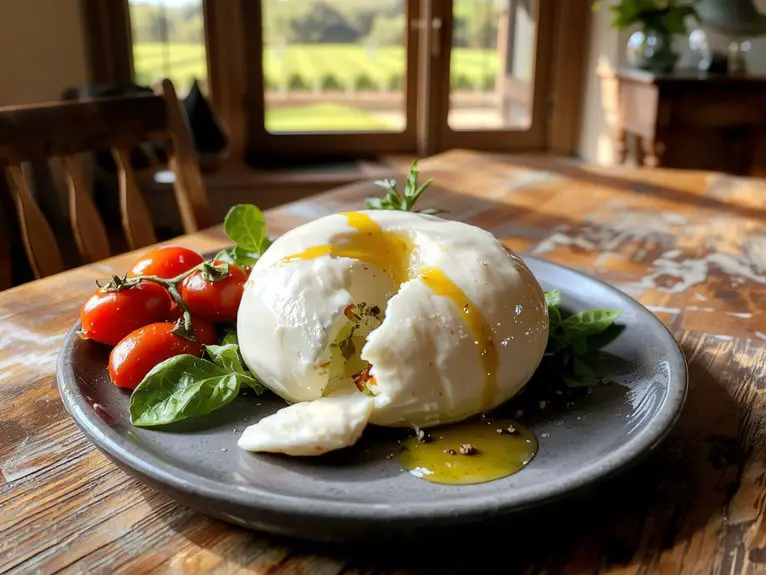
Discover creamy homemade burrata with minimal ingredients—perfectly rich and fresh, surpassing store-bought versions in just a few simple steps.
Recipe
If you’ve ever thought homemade burrata was way out of your culinary league, think again—this recipe is about to change the game. There’s something downright magical about crafting your own creamy, dreamy burrata from scratch, and the payoff is worth every moment.
With just a handful of simple ingredients—fresh mozzarella curds, rich cream, and a pinch of salt—you’ll create a cheese so lusciously indulgent it’ll make store-bought versions seem like a distant memory.
Imagine this: a delicate mozzarella pouch filled with silky, decadent stracciatella that oozes out with every bite. Trust me, once you taste it, you’ll never look back.
Plus, it’s surprisingly approachable—even if you’re a cheese-making novice. Let’s jump in and make burrata magic happen in your kitchen!
Ingredients
Making burrata at home is easier than you might think, but using the right ingredients guarantees that creamy, luxurious texture we all love. Freshness is key here—nothing beats the flavor of high-quality dairy and a few simple additions. Let’s break it down:
- Fresh Whole Milk: Opt for non-homogenized, high-fat milk for the creamiest results. This is the foundation of your burrata, so don’t skimp on quality.
- Citric Acid or Lemon Juice: Essential for coagulating the milk. Citric acid gives a more neutral flavor, but lemon juice works in a pinch if you enjoy a slight tang.
- Heavy Cream: This is what gives burrata its iconic creamy center. Use the richest cream you can find.
- Rennet (Liquid or Tablet): Helps set the curds. Look for vegetarian rennet if needed—it’s just as effective.
- Salt (Fine Sea Salt): Enhances the flavor of both the curds and the cream filling. Don’t skip this—it’s the difference between bland and blissful.
- Cheesecloth or Muslin: For draining the curds. Muslin is ideal for its tighter weave, but cheesecloth works too.
Pro tip: If you’re new to cheese-making, practice with citric acid before moving to rennet—it’s more forgiving.
And remember, freshness matters—always use the best dairy you can find for that signature burrata texture.
How to Make the Best Burrata Technique Guide
- Rest before serving: Refrigerate for at least 1 hour to let flavors meld.
- Flexibility: Enjoy within 48 hours for peak freshness—the creamier, the better!
Nutrition
Burrata is a creamy Italian cheese that offers a rich flavor and texture. Here is the nutritional information for a homemade burrata recipe:
| Nutrient | Amount per Serving |
|---|---|
| Calories | 320 kcal |
| Total Fat | 28 g |
| Saturated Fat | 18 g |
| Cholesterol | 70 mg |
| Sodium | 200 mg |
| Total Carbs | 1 g |
| Protein | 12 g |
Chef Tips
With its rich texture and delicate flavor, burrata deserves careful handling to shine. I always serve it at room temperature—cold mutes its creaminess.
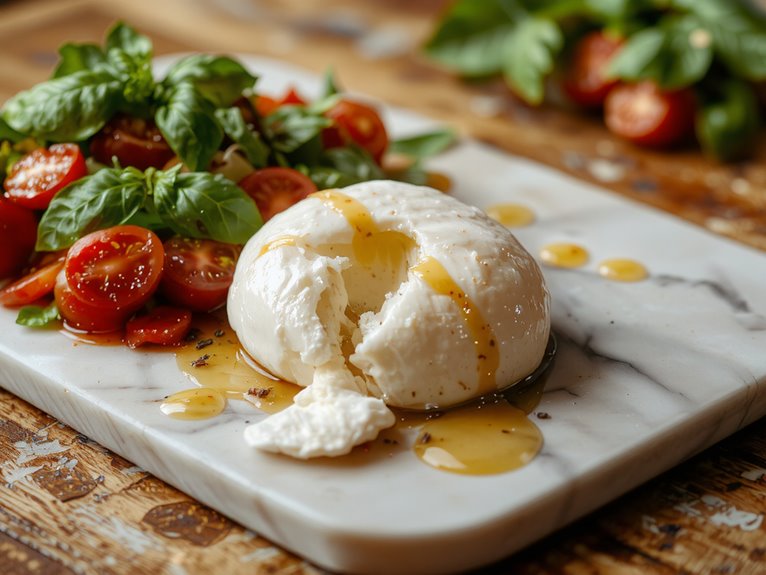
Tear, don’t cut, to preserve its luscious interior. Pair with ripe tomatoes, fresh basil, and a drizzle of olive oil for simplicity.
Salt just before serving to avoid drawing out moisture. Use within a day for peak freshness.
Trust me, these small touches make all the difference.
Frequently Asked Questions
Can I Use Store-Bought Burrata for This Recipe?
Sure, I can use store-bought burrata for this recipe. It’s convenient and still tastes great. I’ll just make sure it’s fresh and high-quality to get the creamy texture I’m looking for.
How Long Does Homemade Burrata Last in the Fridge?
I’d say homemade burrata lasts 1-2 days in the fridge since it doesn’t have preservatives. I always eat mine fresh, but if you store it in water, it might stretch to 3 days—just don’t push it.
What’s the Best Milk to Use for Making Burrata?
I’d recommend using whole milk for making burrata—it’s creamy and rich, which gives the cheese its signature texture. Avoid ultra-pasteurized milk; it doesn’t curdle as well, and I’ve found it compromises the final results.
Can I Freeze Homemade Burrata?
Yes, you can freeze it, but I’d recommend against it. Freezing changes its creamy texture, and it might separate when thawed. If you must, wrap it tightly and use it within a month for best results.
Why Is My Burrata Not Stretchy?
My burrata’s not stretchy ’cause I might’ve overworked the curds or used milk that’s too fresh—it needs acidity. If I didn’t heat the curds enough or knead them properly, that’d mess it up, too.
The Best Homemade Burrata Recipe
Discover creamy homemade burrata with minimal ingredients—perfectly rich and fresh, surpassing store-bought versions in just a few simple steps.

What to Serve With This Recipe


Leave a Review or Ask a Question
Your rating, tips, and questions help other home cooks. Tell us how it turned out or ask anything before you make it.